
 English
 中文简体
中文简体 русский
 Español
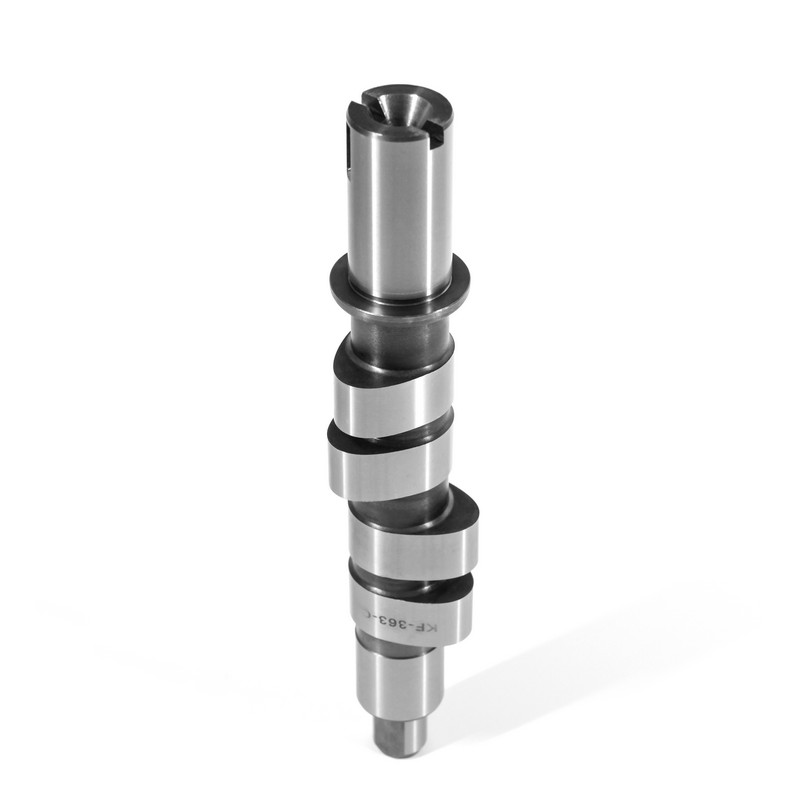
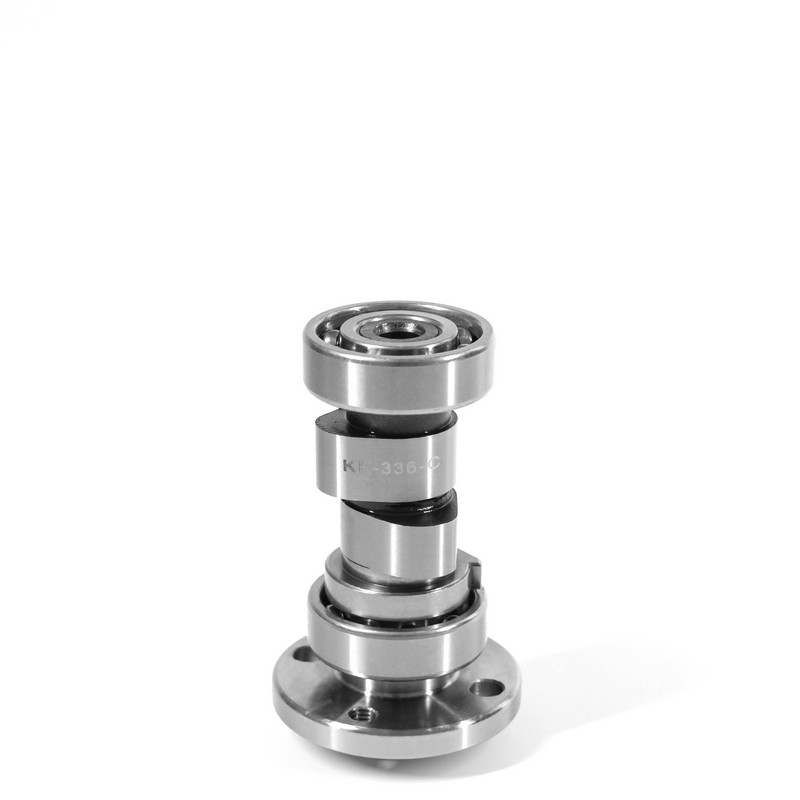
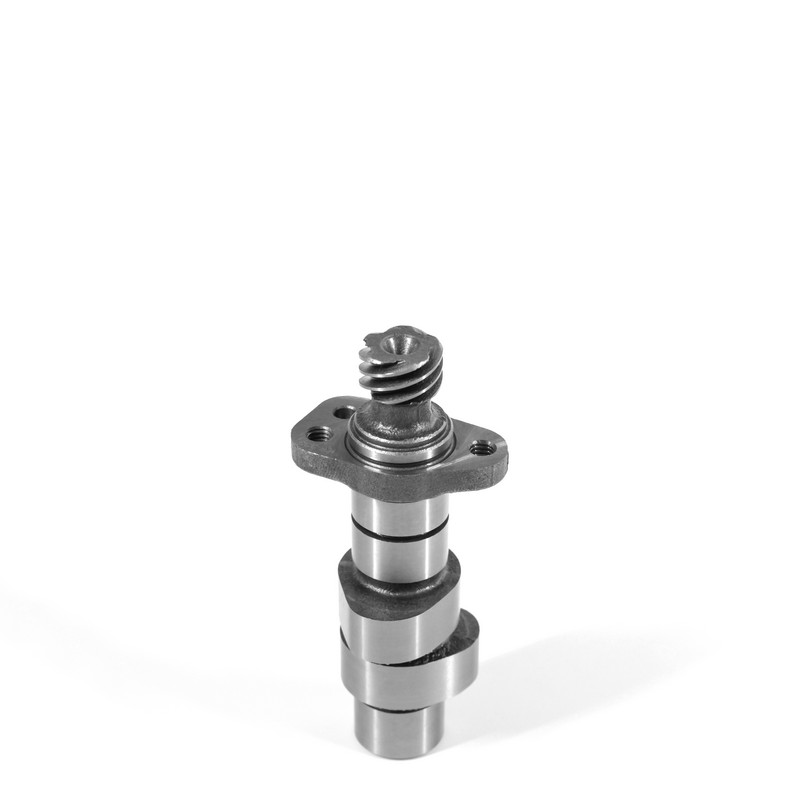
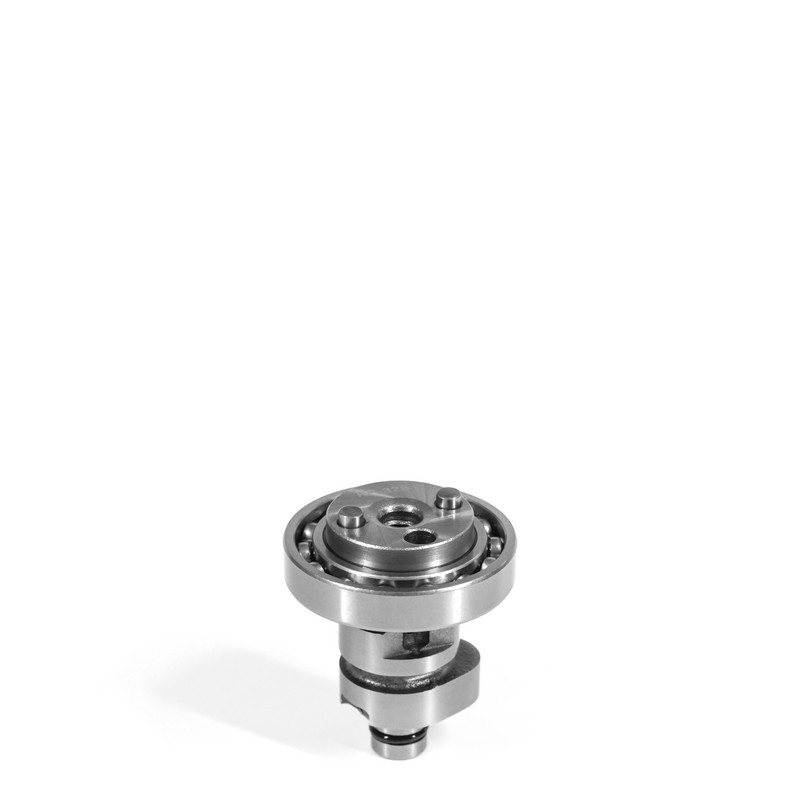
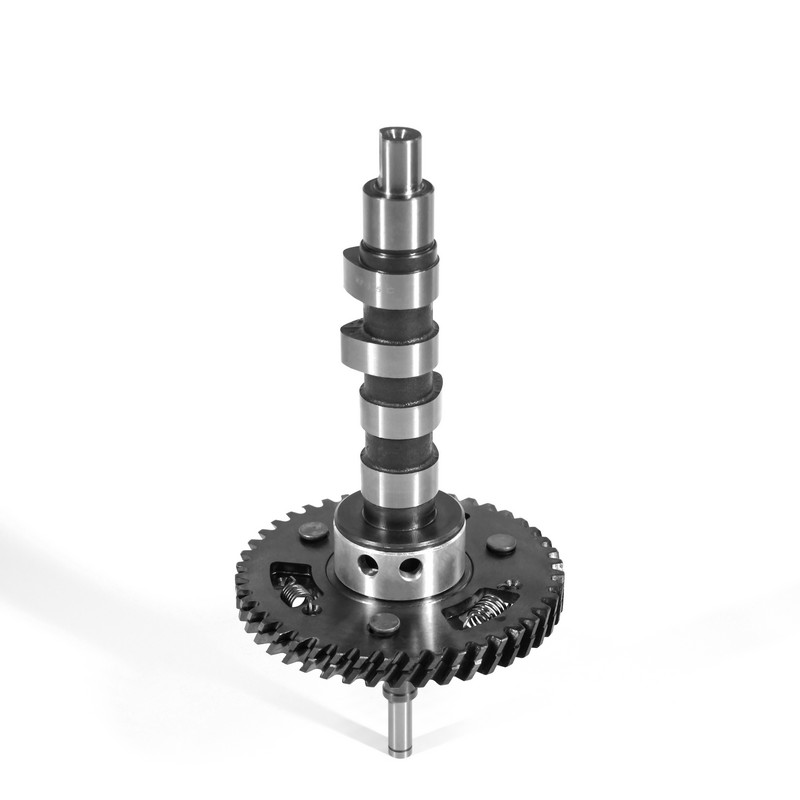
Most modern cars have 1 to 4 camshafts depending on engine design. A camshaft controls the opening and closing of engine valves — it is not the same as a crankshaft, which converts piston motion into rotation. A bad camshaft produces symptoms like rough idle, misfires, poor acceleration, and ticking noises. You should not drive with a bad camshaft — doing so risks catastrophic engine damage within miles.
How Many Camshafts Are in a Car?
The number of camshafts in a car depends entirely on the engine's valve configuration. There is no single universal answer, but the three most common arrangements are OHV (one camshaft), SOHC (one per cylinder bank), and DOHC (two per cylinder bank).
| Engine Type | Camshaft Count | Typical Applications | Examples |
|---|---|---|---|
| OHV (Overhead Valve) / Pushrod | 1 | Trucks, muscle cars, heavy-duty engines | Chevy 5.3L V8, Dodge 5.7L HEMI, Ford 7.3L Godzilla V8 |
| SOHC (Single Overhead Cam) — Inline 4 | 1 | Economy sedans, small SUVs | Honda Civic 1.5T (pre-2017), Toyota Camry 2.5L (2AR-FE) |
| SOHC — V6 or V8 | 2 (one per bank) | Mid-size cars, entry-level trucks | Ford 4.0L V6 SOHC, Jeep 3.7L V6 |
| DOHC (Dual Overhead Cam) — Inline 4/6 | 2 | Performance cars, modern economy cars | BMW 2.0L B48, Honda 2.0L K20C, Toyota 2JZ-GTE |
| DOHC — V6 or V8 | 4 | Performance vehicles, luxury cars | Ford 5.2L Voodoo V8, BMW 4.4L N63, Nissan VQ37VHR V6 |
| DOHC — V10 or V12 | 4 | Supercars, ultra-luxury vehicles | Lamborghini Huracán V10, Ferrari 812 V12 |
OHV Engines: One Camshaft, Mounted in the Block
In a classic pushrod OHV engine — like the GM LS family or the Chrysler HEMI — a single camshaft sits inside the engine block between the cylinder banks. It operates all intake and exhaust valves through a system of pushrods and rocker arms. Despite being a decades-old design, OHV engines remain popular in trucks and performance applications because they are compact, torque-rich, and mechanically simple. A GM 5.3L V8 with a single camshaft can produce over 355 horsepower with just 16 valves controlled by that one shaft.
SOHC Engines: One Cam Per Cylinder Bank
A Single Overhead Camshaft engine moves the camshaft above the cylinder head, eliminating pushrods. An inline-4 SOHC has just one camshaft; a V6 or V8 SOHC has two — one per bank. The single cam operates both intake and exhaust valves through rocker arms or finger followers. Toyota's legendary 22R-E inline-4 is a classic SOHC example that powered millions of trucks reliably for over a decade.
DOHC Engines: Dedicated Intake and Exhaust Cams
Dual Overhead Camshaft engines use separate camshafts for intake and exhaust valves. This allows each shaft to be independently optimized — and in modern engines with variable valve timing (VVT), each cam can be phase-shifted independently to improve power, efficiency, and emissions. A DOHC inline-4 like the Honda K20C in the Civic Type R uses 2 camshafts to manage 16 valves with precision, contributing to its 315-horsepower output from just 2.0 liters. A DOHC V8 such as the Ford 5.2L Voodoo in the Shelby GT350 runs 4 camshafts to control 32 valves, enabling its 8,250 RPM redline.
Camshaft vs. Crankshaft: They Are Not the Same
The camshaft and crankshaft are two distinct components with entirely different jobs, though they are mechanically linked and must work in precise synchronization. Confusing them is one of the most common mistakes among new car owners.
| Feature | Camshaft | Crankshaft |
|---|---|---|
| Location | Cylinder head (OHC) or engine block (OHV) | Bottom of the engine block |
| Primary function | Opens and closes intake and exhaust valves | Converts piston up-and-down motion into rotational torque |
| Rotation speed | Half the crankshaft speed (1:2 ratio) | Engine RPM (e.g., 3,000 RPM at highway speed) |
| Driven by | Timing belt, timing chain, or timing gears from the crankshaft | Piston connecting rods (directly driven by combustion) |
| Failure consequence | Valve timing loss, misfire, possible valve-piston contact | Complete engine seizure, connecting rod failure ("thrown rod") |
| Sensor | Camshaft position sensor (CMP) | Crankshaft position sensor (CKP) |
| Replacement cost | $1,500 – $3,000+ (labor intensive) | $2,000 – $7,000+ (requires engine disassembly) |
Why They Must Be Synchronized
The camshaft rotates at exactly half the crankshaft speed because each cylinder completes a full 4-stroke cycle (intake, compression, power, exhaust) over 2 full crankshaft revolutions. The timing belt or chain keeps this 2:1 ratio locked. If the timing belt breaks or skips a tooth, the camshaft and crankshaft fall out of sync. In an interference engine — like most Honda, Toyota, and Volkswagen engines — this causes the valves (controlled by the cam) to collide with the pistons (controlled by the crank), bending valves and potentially destroying the engine in milliseconds.
How to Tell Which Sensor Has Failed
Modern engines have both a camshaft position sensor (CMP) and a crankshaft position sensor (CKP). When either fails, the engine may crank but not start, or run erratically. The key distinction: a failed CKP sensor almost always prevents the engine from starting entirely, because the ECU cannot determine piston position for ignition timing. A failed CMP sensor may allow the engine to start and run but will typically trigger a P0340–P0349 (cam position) fault code rather than a P0335–P0338 (crank position) fault code. Always read the OBD-II code before assuming which component has failed.
Symptoms of a Bad Camshaft
Camshaft problems rarely appear without warning. The symptoms progress from subtle to severe, and catching them early — before the camshaft lobes wear flat or the bearing journals seize — is the difference between a repair and a full engine replacement.
Ticking or Tapping Noise from the Valve Train
A rhythmic ticking or tapping noise that increases with engine RPM is one of the earliest signs of camshaft wear. It typically originates from worn cam lobes failing to fully open valves, or from collapsed hydraulic lifters that can no longer maintain proper valve clearance. This sound is different from the brief cold-start tick that disappears after 30 seconds of warm-up — a camshaft-related tick persists at operating temperature and often gets louder over time. On engines like the GM 5.3L V8 (known for Active Fuel Management lifter issues) or the early BMW N47, persistent valve train noise is a red flag that warrants immediate inspection.
Engine Misfires and Rough Idle
Worn camshaft lobes reduce valve lift, meaning the affected cylinders do not receive a full charge of air-fuel mixture. The result is a misfire on that cylinder — felt as a rhythmic stumble at idle or under load. The OBD-II system will typically log P0300 (random misfire), P0301–P0308 (cylinder-specific misfire), or related codes. If misfires are present but spark plugs, ignition coils, and fuel injectors all test normal, the camshaft and valve train should be the next area of investigation.
Poor Acceleration and Loss of Power
Because the camshaft directly controls how much air enters and exits each cylinder, a worn cam reduces volumetric efficiency across the RPM range. Drivers typically notice the engine feels sluggish above 3,000 RPM, struggles to maintain highway speed, or fails to respond normally when the throttle is pressed firmly. A car that previously ran 0–60 mph in 7 seconds may feel noticeably slower — not due to a fuel or ignition issue, but because the valves are simply not opening far enough.
Check Engine Light — Cam-Specific Fault Codes
Variable valve timing systems rely on the camshaft responding quickly to ECU commands. When cam actuators, phaser sprockets, or position sensors fail, the ECU logs specific codes. Common camshaft-related fault codes include:
- P0340 / P0341 / P0342 / P0343: Camshaft Position Sensor Circuit faults (Bank 1)
- P0345 / P0346 / P0347 / P0348: Camshaft Position Sensor Circuit faults (Bank 2)
- P0010 / P0013: "A" Camshaft Position Actuator Circuit — intake or exhaust phaser solenoid failure
- P0016 / P0017: Crankshaft/Camshaft Position Correlation — timing chain stretch or phaser malfunction
- P0020 / P0023: Camshaft Position Actuator faults on Bank 2
A P0016 or P0017 code is particularly serious — it indicates the camshaft and crankshaft timing marks are no longer aligned, which in an interference engine can quickly progress to mechanical valve damage.
Excessive Oil Consumption or Oil Pressure Drop
Camshaft bearing journals rely on a film of pressurized oil to prevent metal-to-metal contact. When those journals wear, oil clearances increase and the engine's lubrication system loses pressure to that area. Drivers may notice the oil pressure warning light flickering at idle, or find the engine consuming a quart of oil every 1,000–1,500 miles despite no visible leaks. Both are signs of internal wear that can involve the camshaft bearings.
Backfiring Through the Intake or Exhaust
A severely worn camshaft lobe may cause a valve to open at the wrong time relative to the combustion cycle. If an exhaust valve opens too early, unburned fuel can ignite in the exhaust manifold, causing backfiring and loud popping sounds. Intake backfiring occurs when the intake valve timing is so far off that combustion gases travel back through the air intake. Either symptom at this stage indicates the camshaft damage is advanced.
Can You Drive a Car with a Bad Camshaft?
No — you should not drive a car with a confirmed bad camshaft. While a car with mild cam wear may technically move under its own power, continuing to drive accelerates the damage exponentially and risks converting a $1,500–$3,000 camshaft repair into a $6,000–$12,000 engine replacement.
What Happens When You Keep Driving
- Flat cam lobes: A worn cam lobe that has lost its profile will eventually wear completely flat, at which point the affected valve stops opening entirely. That cylinder becomes dead, and the engine runs on reduced power while fuel and oil are potentially contaminated by raw fuel wash.
- Lifter and rocker arm damage: Metal debris from a failing cam lobe circulates through the oil system, accelerating wear on hydraulic lifters, rocker arms, and even the crankshaft bearings downstream.
- Timing chain / belt damage: If cam timing is off due to a stretched chain or failed phaser, continued driving worsens the timing deviation. In interference engines, the margin between "running rough" and "bent valves" can be as little as a few degrees of camshaft rotation.
- Catalytic converter damage: Misfires caused by a bad cam push unburned fuel into the exhaust system. At 1,200–1,600°F, that fuel ignites inside the catalytic converter, melting the ceramic substrate. A replacement catalytic converter costs $800–$2,500 on top of the camshaft repair.
What to Do Instead
- If the check engine light is on with cam-related codes, have the car diagnosed before driving further. Many codes (like a P0010 solenoid fault) can be addressed without replacing the camshaft itself.
- If you hear a persistent valve train tick or the engine is misfiring at idle, reduce driving to the minimum necessary and schedule a repair within days, not weeks.
- If the engine has suddenly lost significant power, is backfiring, or oil pressure is low, stop driving immediately and have the car towed.
- Check oil level and condition first — low or dirty oil is a leading cause of premature camshaft wear and is sometimes the root problem rather than the cam itself.
Typical Camshaft Repair Costs
| Repair Type | Estimated Cost (Parts + Labor) | Notes |
|---|---|---|
| Camshaft position sensor replacement | $150 – $350 | Common first step; does not involve opening the engine |
| VVT phaser / actuator solenoid | $300 – $800 | Often the actual cause of cam-related codes; less invasive |
| Timing chain / belt replacement | $600 – $1,800 | Required if cam/crank correlation codes are present |
| Camshaft replacement (inline-4, DOHC) | $1,200 – $2,500 | Labor-intensive; requires removing the cylinder head in many cases |
| Camshaft replacement (V8, OHV) | $1,500 – $3,500 | Requires engine disassembly; often paired with lifter replacement |
| Full engine replacement (damage from driving on bad cam) | $4,000 – $12,000+ | Worst-case outcome from delayed repair |
What Causes Camshaft Failure?
Understanding what destroys camshafts helps you prevent the problem in the first place. The vast majority of premature camshaft failures trace back to a small number of causes.
Low or Degraded Engine Oil
The camshaft is one of the highest-load components in the valvetrain. Each cam lobe contacts its lifter or follower with significant force — on a 4-cylinder engine running at 3,000 RPM, each cam lobe makes contact 1,500 times per minute. Without a continuous film of clean, pressurized oil, those lobes begin to wear within minutes. Operating an engine just 1–2 quarts low on oil can halve oil pressure to the cylinder head, causing cam lobe wear that compounds over thousands of miles. Using oil that is past its service interval — typically 5,000–7,500 miles for conventional oil or 10,000–15,000 miles for full synthetic — allows the oil's anti-wear additives to deplete, exposing cam surfaces to accelerated wear.
Timing Chain Stretch and VVT System Neglect
Modern engines with Variable Valve Timing (VVT) — found in virtually every car built after 2005 — use oil-pressure-controlled phasers to advance or retard the camshaft. These systems are sensitive to oil viscosity and contamination. Neglecting oil changes causes sludge buildup in the phaser solenoid screens, restricting oil flow and causing the phaser to stick. A stuck phaser generates cam-to-crank timing correlation fault codes (P0016/P0017) and, over time, accelerates wear on the phaser sprocket teeth and the timing chain itself.
Debris Contamination After a Repair
Any engine repair that opens the valve train — a head gasket replacement, timing belt service, or top-end rebuild — must be performed with meticulous cleanliness. A single metal chip or piece of gasket material left in an oil passage can score a cam bearing journal within the first few cold starts after reassembly. This is why professional cam replacement always includes flushing the oil passages and replacing the oil and filter before the first startup.
Summary: Key Facts About Car Camshafts
| Question | Answer |
|---|---|
| How many camshafts does a car have? | 1 (OHV or SOHC inline), 2 (SOHC V-engine or DOHC inline), or 4 (DOHC V-engine) |
| Is a camshaft the same as a crankshaft? | No — cam opens valves; crank converts piston motion to rotation. They rotate at a 1:2 ratio. |
| First symptoms of a bad camshaft? | Valve train tick, engine misfires, check engine light with P0340/P0016-range codes |
| Can you drive on a bad camshaft? | No — risk of catalytic converter damage, bent valves, or full engine failure |
| Most common cause of camshaft failure? | Low or dirty engine oil; VVT phaser failure from infrequent oil changes |
| Camshaft replacement cost? | $1,200 – $3,500 depending on engine type; sensor/solenoid fixes start at $150 |



 闽公网安备35018102000203号