Article Directory
The pursuit of horsepower often leads automotive enthusiasts to high-lift, long-duration ford racing camshafts. However, for the daily driver, the technical challenge lies in balancing peak power gains with the practicalities of street use, specifically manifold vacuum and idle stability. Anhui KORBOR Machinery Co., Ltd., a premier camshaft manufacturer with 25 years of innovation since 1999, understands this delicate equilibrium. Operating a 22,000 square meter plant and following IATF16949:2016 standards, we specialize in high-precision mass production of automotive and motorcycle camshafts. Our engineering team utilizes advanced heat treatment processes—such as carburizing and quenching—to ensure that even high-performance profiles maintain the structural integrity required for consistent daily operation.
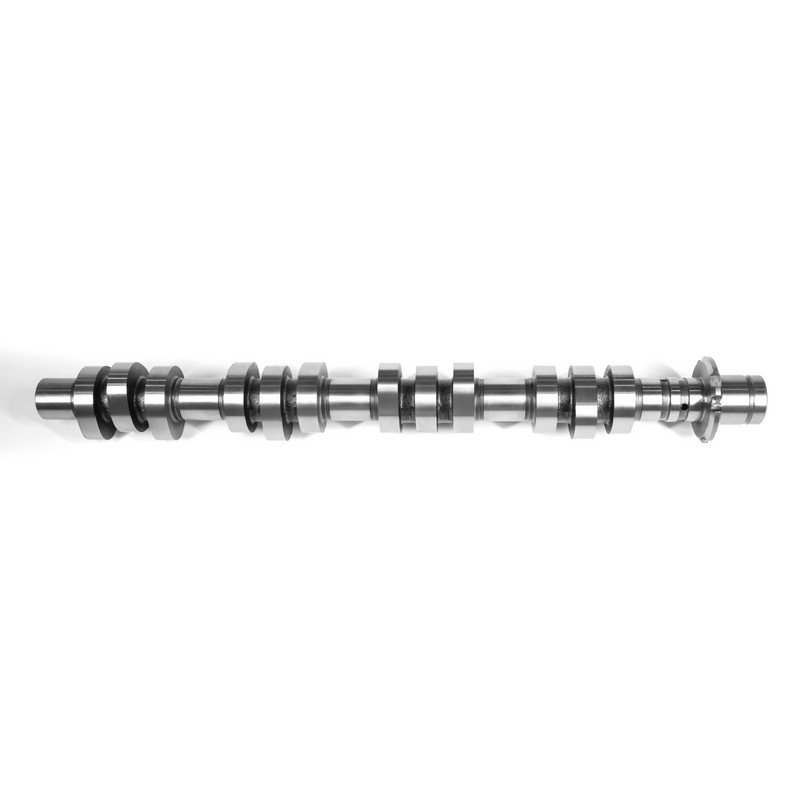
A primary technical concern when installing ford racing camshafts is the effect on manifold vacuum. Vacuum pressure is essential for the proper functioning of power brakes and PCV systems. A common technical question is: how does camshaft duration affect engine vacuum? As duration increases, the intake and exhaust valves stay open longer simultaneously (overlap). While this facilitates high-RPM scavenging, it significantly reduces vacuum at low RPMs, potentially making a vehicle difficult to drive in stop-and-go traffic.
While a race-profile cam optimizes high-speed airflow, it results in a "choppy" idle and low vacuum pressure compared to a street-optimized profile which maintains high velocity at lower engine speeds.
| Technical Specification | Street Performance Profile | Full Race Camshaft Profile |
| Lobe Separation Angle (LSA) | Wider (112° - 114°) | Narrower (106° - 110°) |
| Idle Vacuum Level | High (15-20 in. Hg) | Low (Under 10 in. Hg) |
| Brake Booster Compatibility | Excellent | Requires Vacuum Canister/Pump |
Daily driving subjects a camshaft to thousands of heat cycles and constant friction. Many mechanics ask: what is the best material for performance camshafts? At Anhui KORBOR Machinery Co., Ltd., we select high-performance alloys and apply tempering and quenching to enhance hardness and wear resistance. For ford racing camshafts, the material must withstand the high spring pressures associated with aggressive lobe profiles without "wiping" a lobe during cold starts—a common failure point in daily-driven performance engines.
Compared to standard cast iron blanks, KORBOR's high-carbon alloy steel blanks provide superior fatigue resistance, ensuring that the high-lift demands of racing profiles do not compromise long-term durability.
| Material Property | High-Performance Alloy Steel | Standard Ductile Iron |
| Surface Hardness | High (HRC 58-62 after quenching) | Moderate |
| Wear Resistance | Superior for high-lift applications | Standard for OEM replacement |
| Zero Defect Potential | High (Strict IATF16949 control) | Variable |
Engineers must evaluate the performance camshafts vs stock camshafts comparison before committing to a daily driver build. High-lift ford racing camshafts shift the power band higher into the RPM range. For a daily driver, this can result in "sluggish" performance at stoplights. However, modern "Stage 1" or "Street-Strip" grinds are engineered to provide a noticeable power increase while maintaining enough low-end torque for smooth acceleration. KORBOR delivers more than 2.3 million sets of products annually, often focusing on these optimized profiles that satisfy the global market's demand for high cost-performance.
The term "over-cammed" refers to selecting a profile too aggressive for the vehicle's torque converter or gear ratio. Understanding symptoms of a performance camshaft with too much lift is key to a successful build. These symptoms include bucking at low speeds, fouled spark plugs from rich idling, and poor power brake assist. At KORBOR, we encourage customers to seek diversified solutions that match their specific transmission and rear-end gears to the camshaft's intended power curve.
It depends on the duration. For aggressive ford racing camshafts, a higher-stall torque converter is often required to keep the engine in its new power band and prevent stalling at idle.
Yes. Racing profiles generally feature higher lift, which can cause coil bind on stock springs. Using KORBOR's high-precision ford racing camshafts should always be paired with springs rated for the specific lift and RPM range.
We implement the "zero defect" production concept and IATF16949:2016 standards. Every batch undergoes multi-level quality control from blank casting to finished product.
Not necessarily. If the ford racing camshafts are manufactured using high-quality alloy steel and proper heat treatment like KORBOR's, and the oiling system is maintained, the engine can remain reliable for years.
Anhui KORBOR is committed to sustainable production. We reduce waste generation and require all supply chain partners to meet strict environmental and labor standards during the manufacturing process.

 English
 中文简体
中文简体 русский
 Español



 闽公网安备35018102000203号