Article Directory
At 3,000 rpm, a four-stroke engine completes 1,500 combustion cycles per cylinder every minute. Each intake and exhaust valve must open and close at a precisely defined crank angle, thousands of times per minute, without drifting even by a fraction of a degree. The component responsible for that discipline is the camshaft. It does not simply push valves open; it decides when they open, how far they open, and how long they stay open. Those three decisions define the engine's power band, fuel economy, emissions, and idle quality. This article explains how a camshaft controls engine valve timing, what the key timing parameters mean in practice, and why manufacturing precision is inseparable from timing accuracy.
The camshaft controls valve timing by converting its own rotation into precisely scheduled valve motion, and the crankshaft establishes that schedule through a fixed 2:1 drive ratio.
In a conventional four-stroke engine, the crankshaft turns twice for every complete cycle: intake, compression, power, exhaust. The camshaft turns once in the same period. A timing chain, belt, or gear train locks the two shafts together, so camshaft position is always a known function of crankshaft position. If the ratio changes, or if chain stretch shifts the relationship, the valves open and close at the wrong piston positions, causing loss of power or even piston-to-valve contact.
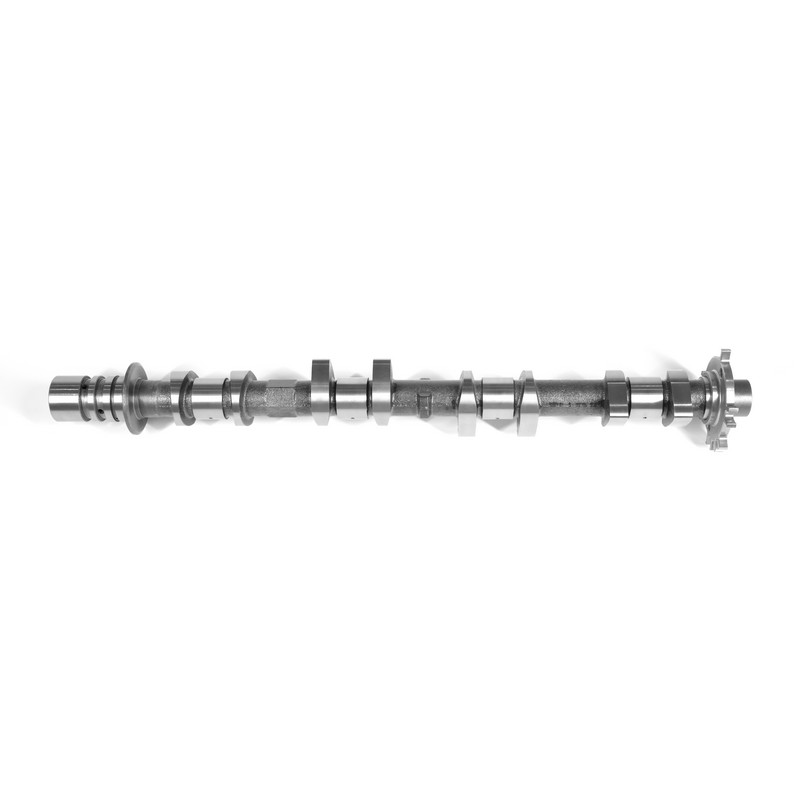
Each valve is operated by a dedicated lobe on the camshaft. As the camshaft rotates, the lobe profile—base circle, opening flank, nose, and closing flank—pushes a lifter or tappet, which transfers motion through a direct-acting bucket or a rocker arm. The valve spring returns the valve to its seat as the lobe releases it. The shape of the lobe, not the rotation speed, establishes the timing signature.
Three lobe parameters matter most: lift, duration, and phasing. They cascade through every aspect of engine behavior, from idle smoothness to peak power.
Lift is the maximum distance the valve moves off its seat, measured in millimeters or thousandths of an inch. Greater lift lets more air enter the cylinder, but it also increases valve train stress and requires stiffer valve springs to prevent valve float at high engine speeds.
Duration is the number of crankshaft degrees during which the valve remains off its seat. Longer duration gives the cylinder more time to fill or empty, which supports high-rpm power, but it generally shifts the power band upward and weakens low-speed torque. A stock cam with short duration idles smoothly; a race cam with long duration idles roughly because the intake and exhaust events bleed into each other.
Lobe separation angle (LSA) is the angle between the centerlines of the intake and exhaust lobes for the same cylinder. A tighter LSA increases valve overlap—the period near top dead center when both valves are partially open. Overlap assists exhaust scavenging at high engine speeds but degrades idle stability and low-rpm efficiency. Timing points are normally rated at a specified valve lift, commonly 0.05 inches (1.27 mm), so cams from different suppliers can be compared on an equal basis.
| Parameter | What It Defines | Practical Effect |
|---|---|---|
| Lift | Maximum valve opening distance | Higher lift increases airflow but raises valve train stress |
| Duration | Crank degrees the valve stays open | Longer duration extends the high-rpm power band |
| Lobe Separation Angle | Angle between intake and exhaust lobe centers | Tighter LSA increases overlap and top-end response |
| Overlap | Period when both valves are partially open | More overlap aids scavenging but weakens idle quality |
| Cam Phasing (VVT) | Timing shift of the cam relative to the crank | Adapts timing to engine speed and load |
Intake valves do not open exactly at top dead center, and exhaust valves do not close exactly at bottom dead center. Production camshafts are deliberately advanced or retarded relative to piston position in order to exploit the inertia of gas flow.
Intake valves typically open 10 to 30 degrees before top dead center and close 40 to 70 degrees after bottom dead center. Late intake closing uses the momentum of the incoming air to keep filling the cylinder after the piston has started to rise. Exhaust valves open 40 to 70 degrees before bottom dead center and close 10 to 30 degrees after top dead center. Early exhaust opening trades a little expansion work for more time to evacuate combustion gases before the next intake stroke begins.
As a result, intake and exhaust events overlap near top dead center. A mild passenger-car engine may carry only 20 to 40 degrees of overlap, while a performance engine with a wide power band may use 60 degrees or more. The lobe profile and the installed phasing together set these numbers. That is why valve timing can be tuned by changing the camshaft, or by rotating a VVT camshaft relative to the crankshaft, without touching the cylinder head.
Valve timing is only as accurate as the camshaft and the drive system that positions it. A worn lobe reduces lift and slows the opening ramp, cutting airflow and shifting the power band. A stretched timing chain retards the camshaft relative to the crankshaft, delaying valve events and increasing overlap at the wrong part of the cycle. The symptoms are a rough idle, weak low-end torque, higher fuel consumption, and in the worst case, piston-to-valve contact if the timing jumps far enough.
Runout is a less obvious source of timing error. If the camshaft is bent or its bearing journals are ground off-center, the effective timing of each lobe changes as the shaft rotates. Production specifications typically hold journal runout below 0.02 mm (0.0008 in), because even small errors produce unstable valve motion and uneven lobe wear.
Motorcycle camshafts face the same problem at higher repetition rates. Since valve events at 8,000 to 12,000 rpm happen roughly twice as fast as in most car engines, a small lobe or runout error becomes an obvious misfire by mid-range speed. A Yamaha motorcycle camshaft supplied with accurate lobe symmetry and controlled surface finish keeps those events stable throughout the rev range.
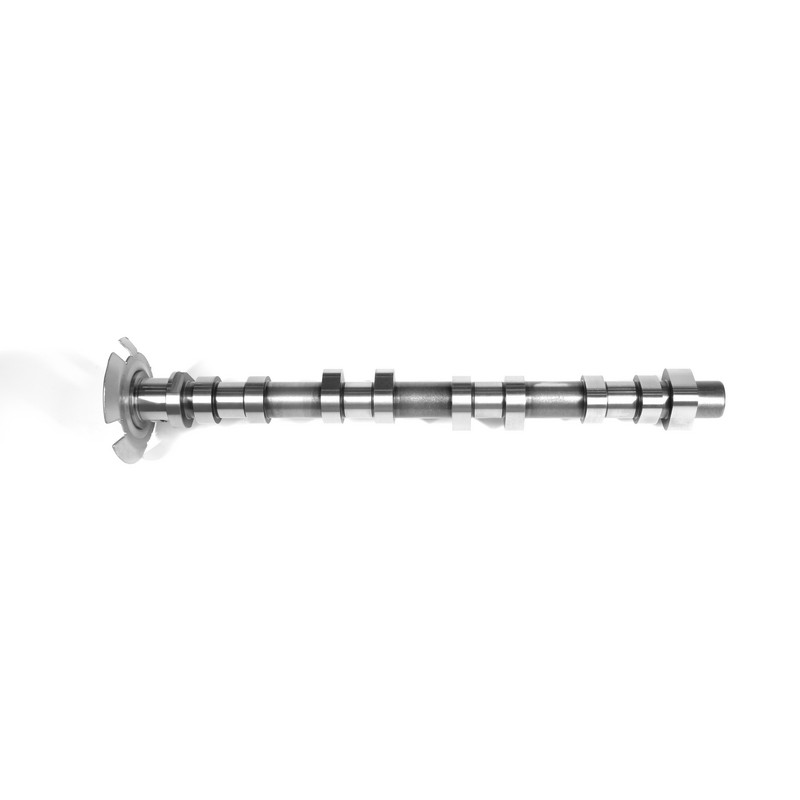
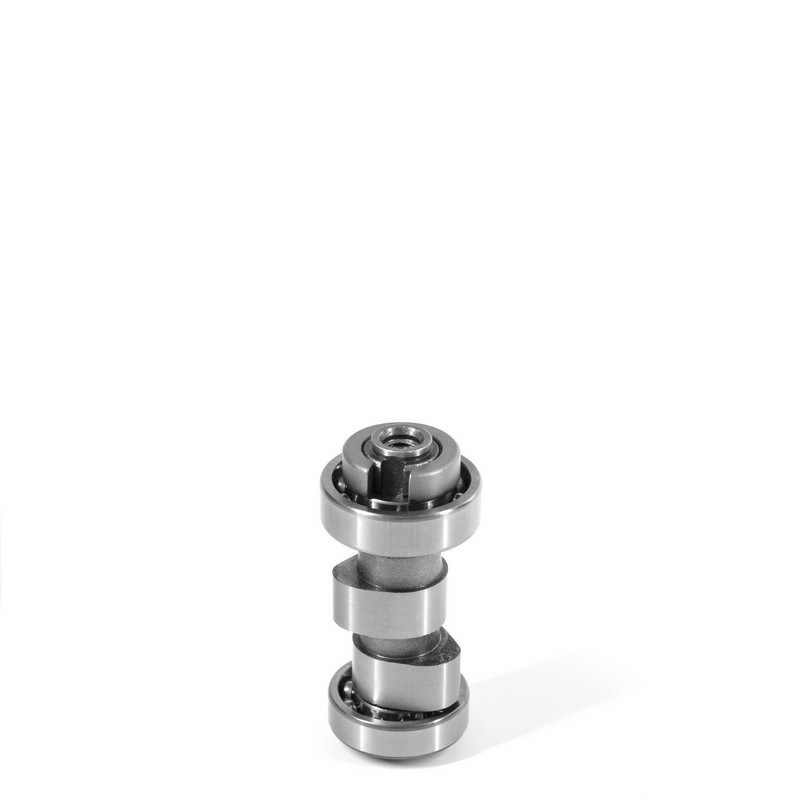 Wholesale Motorcycle camshaft-YAMAHA-4GT-E2170-01 Suppliers, Manufacturers, CompANHUI KORBOR MACHINERY CO., LTD. Is China Wholesale YAMAHA-Motorcycle camshaft-4GT-E2170-01 Suppliers, Manufacturers And Company, We Offe...View Product →
Many engines no longer rely on a fixed camshaft position. Variable valve timing (VVT) systems rotate the camshaft relative to the crankshaft while the engine runs, using oil pressure or electric actuators to shift the camshaft by a controlled number of degrees, typically 20 to 60 degrees of phasing authority. The engine control unit advances the intake camshaft at low and mid-range speeds to improve torque, then retards it at high speeds to preserve top-end output. Some designs also phase the exhaust camshaft or use switching tappets to select between two distinct lift profiles.
VVT changes where a lobe profile is applied relative to the piston; it does not remove the need for precise lobe geometry. The base accuracy of the camshaft sets the floor for how cleanly the engine runs. If lobe profiles, lobe-to-lobe spacing, and journal runout are not held to tolerance, advancing and retarding the camshaft only moves an inaccurate pattern around.
European engines with bank-to-bank VVT are a good example: the camshaft must also match the trigger wheel and sensor features that the engine control module reads. A VW camshaft that misses those details will set fault codes even when the lobe profile is otherwise correct.
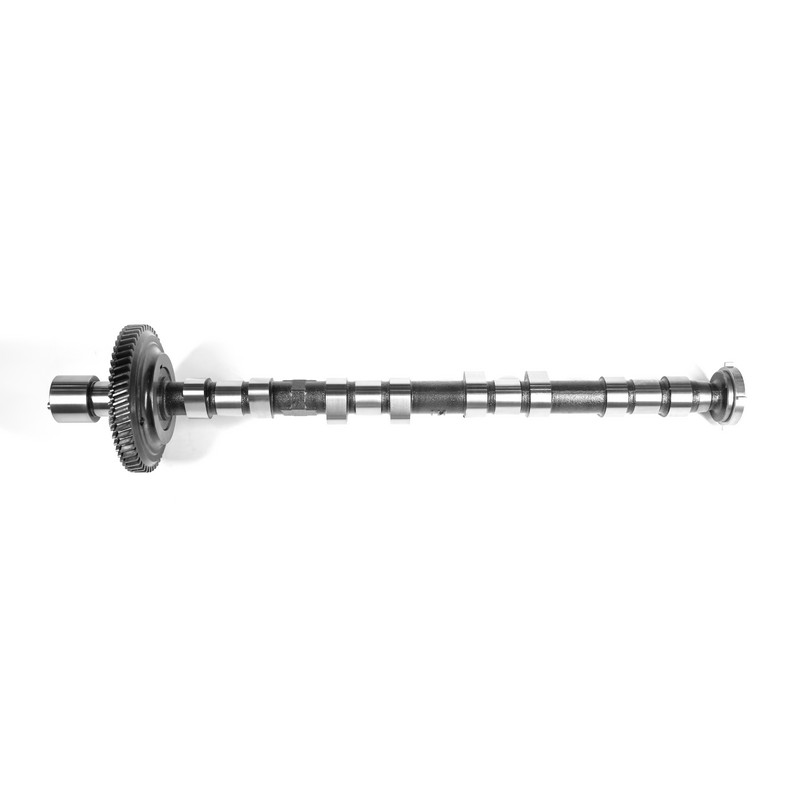
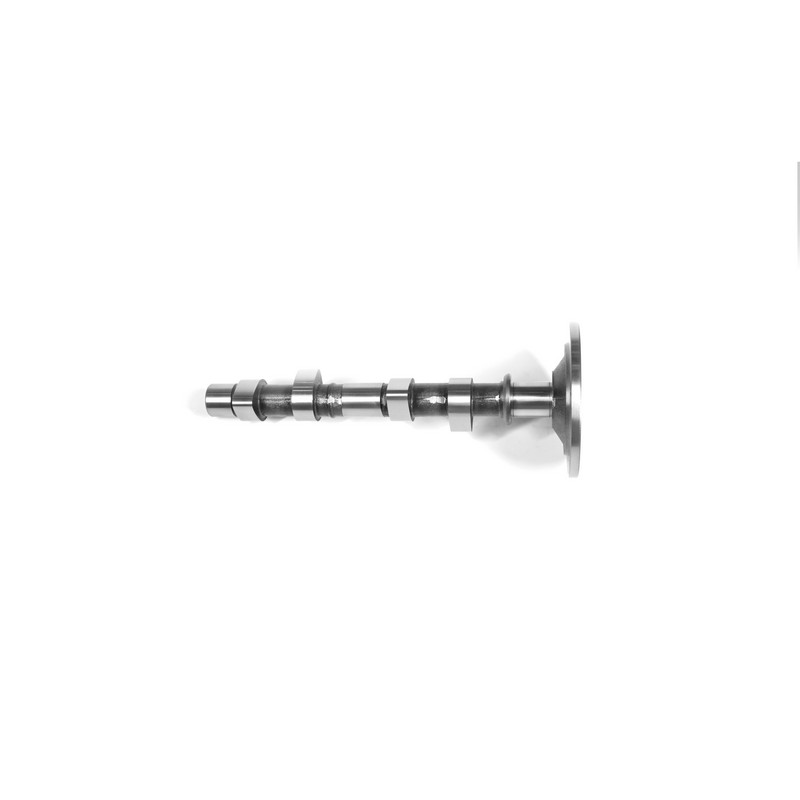 Wholesale Car camshaft-VW-KB-337 Suppliers, Manufacturers, CompanyANHUI KORBOR MACHINERY CO., LTD. Is China Wholesale VW-Car camshaft-KB-337 Suppliers, Manufacturers And Company, We Offer VW-Car camshaft...View Product →
Valve timing is a design topic on paper, but it becomes a manufacturing topic on the production line. A lobe profile in engineering software is only an ideal shape until a machine tool and a heat treatment cycle produce it within tolerance. Small variations in lobe profile, lobe spacing, and journal concentricity translate directly into cylinder-to-cylinder timing differences.
KORBOR has manufactured camshafts as its only product line for more than 25 years, covering more than 800 car and 600 motorcycle camshaft models in a facility that runs from blank casting to the finished ground part. The company operates an IATF16949:2016 quality system with a zero-defect production philosophy, pairing alloy selection with tempering, carburizing, and quenching to maintain hardness and wear resistance without losing dimensional stability. For engine builders and parts distributors, these details matter because a camshaft that meets its print tolerances is what guarantees the designed timing event at the valve.
A Toyota car camshaft replacement, for example, must reproduce the original lobe profile and journal geometry within the same limits so the factory timing chain and VVT actuator operate at the intended crank angles. The same principle applies across every engine family: the more consistent the machining and heat treatment, the more the engine behaves the way the timing spec says it should.
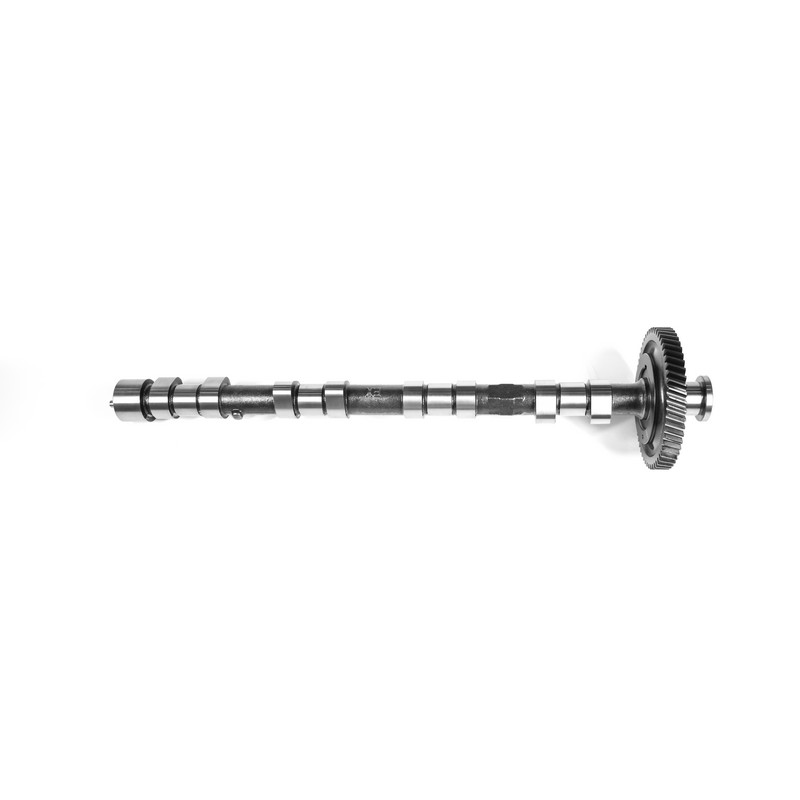
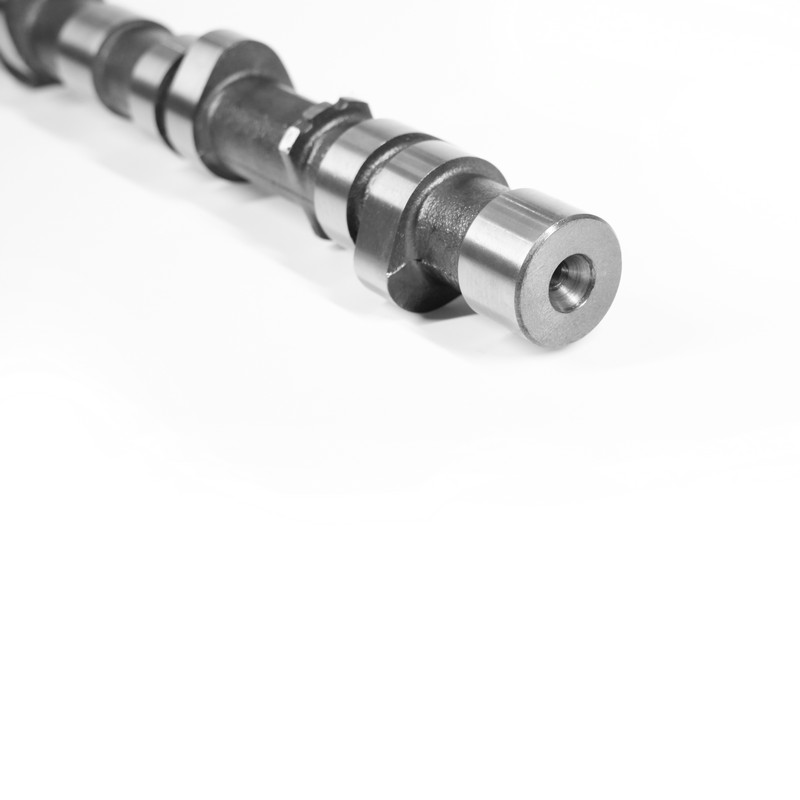 Wholesale Car camshaft-TOYOTA-KB-014 Suppliers, Manufacturers, CompanyANHUI KORBOR MACHINERY CO., LTD. Is China Wholesale TOYOTA-Car camshaft-KB-014 Suppliers, Manufacturers And Company, We Offer TOYOTA-Car ...View Product →
Understanding how a camshaft controls valve timing helps you ask the right questions when selecting a replacement or performance camshaft. What to verify before buying:
A lobe profile that looks aggressive on paper but is ground with sloppy opening ramps will not deliver the intended timing events at the valve. Suppliers with long camshaft-only experience and a documented quality system are better positioned to hold those tolerances batch after batch. KORBOR's 25 years of camshaft-only manufacturing and its IATF16949-certified quality system are the practical guarantee behind every lobe profile it produces. Readers who want a broader look at how the camshaft fits into the greater valvetrain can continue with this automotive camshaft timing system guide.
provide one-stop service from blank casting to finished product finishing, fundamentally control product stability, to ensure delivery.

 English
 中文简体
 русский
 Español





 闽公网安备35018102000203号
