Article Directory
When a gasoline engine starts idling unevenly, losing pull above 4,000 rpm, or chattering from the valve cover, the automobile camshaft is usually the first part to inspect. This one shaft controls every intake and exhaust valve event, and a small deviation in lobe geometry shows up immediately in torque, emissions, and valve-train noise.
Anhui KORBOR Machinery Co., Ltd. (KORBOR) has manufactured camshafts exclusively since 1999 and operates a 28,000-square-meter production base in Anqing, Anhui Province. KORBOR supplies more than 800 automobile camshaft models for gasoline engines across Asian, European, and North American platforms, and it delivers over 2.3 million camshaft sets to global customers every year.
The camshaft determines when the intake and exhaust valves open and close, making it the single most influential component for engine breathing, torque character, and emission behavior in a gasoline engine.
Three numbers define every production camshaft: valve lift, duration, and lobe separation angle (LSA). Lift is how far the valve opens. Duration is the number of crankshaft degrees the valve stays open. LSA is the angular offset between intake and exhaust lobes. Changing any one of them shifts the power band. A production gasoline engine uses conservative profiles tuned for low-end driveability, idle stability, and emissions; a performance profile would sacrifice idle quality and low-rpm torque.
Each lobe tip carries the valve-spring load through the lifter or rocker arm, creating concentrated contact pressure at moderate engine speed. The lobe surface hardness is the primary defense against pitting, scuffing, and lobe wiping. When a camshaft fails, it is almost always a hardness problem rather than a geometry problem.
Chilled cast iron is the default material for mass-produced gasoline engine camshafts because it combines a hard lobe surface with the lowest unit cost; forged alloy steel appears only where sustained high-rpm operation demands higher fatigue resistance.
| Material class | Hardening approach | Typical hardness | Main application |
| Chilled cast iron | Chill casting at the lobe face | 45-55 HRC | Mainstream passenger car engines |
| Nodular cast iron | Austenitizing and induction hardening | 42-52 HRC | Turbocharged and high-torque engines |
| Forged alloy steel | Carburizing or nitriding | 58-62 HRC | High-rpm and high-lift engine programs |
Typical lobe surface hardness by material
Chilled cast iron produces a hard layer directly on the lobe face during casting, which is the most economical route to a durable lobe in an engine that spends most of its life below 6,000 rpm. Nodular cast iron adds impact and fatigue resistance for engines running higher cylinder pressures, such as turbocharged gasoline units. Forged steel blanks cost the most but survive sustained high-rpm duty with aggressive valve-spring rates.
A concrete example in the KORBOR range is the Toyota KB014 camshaft, a chilled-iron part made for Toyota gasoline applications: the lobe surface is hardened at the casting stage, and the bearing journals are finish-ground to a controlled clearance.
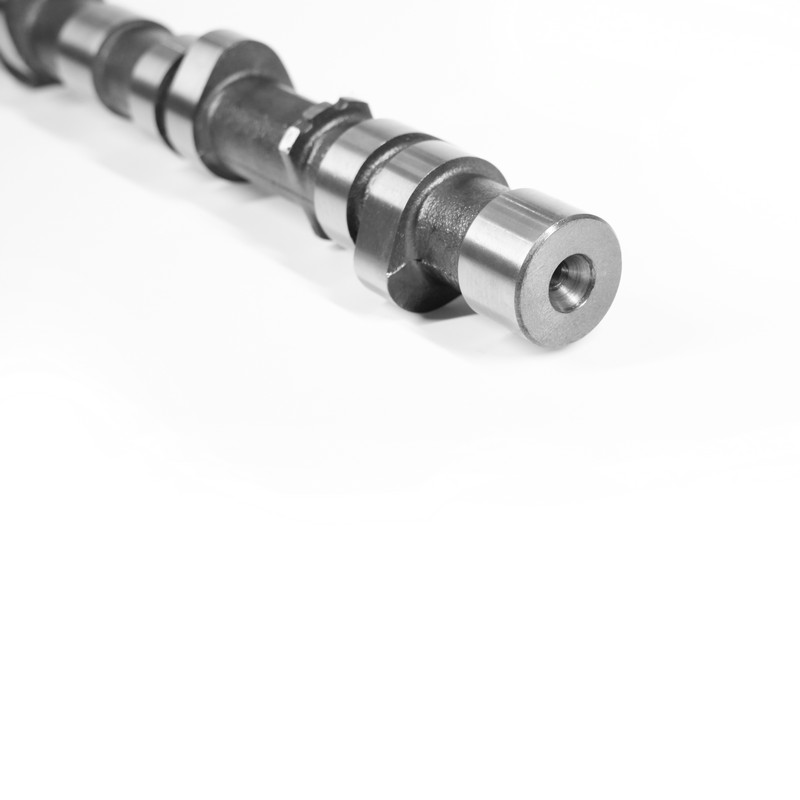 Wholesale Car camshaft-TOYOTA-KB-014 Suppliers, Manufacturers, CompanyANHUI KORBOR MACHINERY CO., LTD. Is China Wholesale TOYOTA-Car camshaft-KB-014 Suppliers, Manufacturers And Company, We Offer TOYOTA-Car ...View Product →
Durability is decided at casting and heat treatment, not at final inspection; every measurement taken at the end of the line reflects material decisions made several processes earlier.
KORBOR operates a complete in-house route from blank casting to finished camshaft. The sequence below is the standard routing for the automobile camshafts in the catalog.
The same seven-step routing applies across the entire range, including the VW KB337 camshaft used in Volkswagen gasoline engines. KORBOR documents this process under a IATF 16949:2016 quality system with multi-level inspection at every stage.
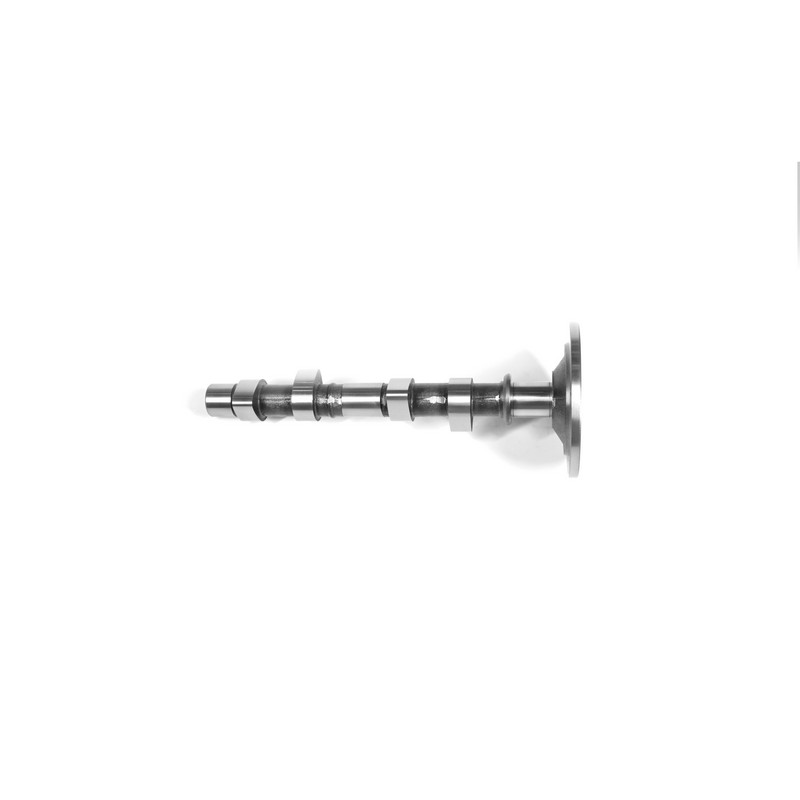 Wholesale Car camshaft-VW-KB-337 Suppliers, Manufacturers, CompanyANHUI KORBOR MACHINERY CO., LTD. Is China Wholesale VW-Car camshaft-KB-337 Suppliers, Manufacturers And Company, We Offer VW-Car camshaft...View Product →
The fastest way to avoid a failed camshaft order is to verify application fit first, lobe profile second, material class third, and supplier quality certification last.
Buyers who source automobile camshafts for gasoline engines tend to make the same mistakes: ordering by car model only, ignoring the engine code, or accepting a reground part without checking the hardness report. These five criteria close that gap.
Reuses the worn core and removes material to re-profile the lobes. Cheaper, but lobe lift is reduced and the original material hardness cannot be improved. Traceability depends on the rebuilder's records.
Starts from fresh blanks with controlled alloy chemistry, full heat treatment, and CNC profile grinding. Consistency is documented from melt to finished part, which suits long-service gasoline engines.
A manufacturer that controls casting, heat treatment, machining, and inspection in one factory can guarantee batch-to-batch consistency that a trading-based supplier cannot match.
KORBOR's production base in Anqing covers 28,000 square meters, including 22,000 square meters of factory space. The company follows IATF 16949:2016 with a zero-defect philosophy built around multi-level inspections at every process stage, and it audits upstream suppliers for environmental and labor standards so material provenance stays under control.
Because KORBOR produces only camshafts, engineering effort and quality-system resources are not spread across other components, and the company has built a camshaft-only manufacturing history since 1999. The same vertical integration shows up in delivery: handling everything from blank casting to finished part shortens lead time and removes the tolerance stacking created when different processes are scattered across suppliers.
camshaft sets shipped every year, supported by an annual production capacity that sustains large batch orders without sacrificing part-to-part consistency.
The Ford KB577 camshaft represents the same routing for Ford gasoline engines: it is produced on the same lines, with the same heat-treatment and profile-grinding sequence, as every other part in the catalog.
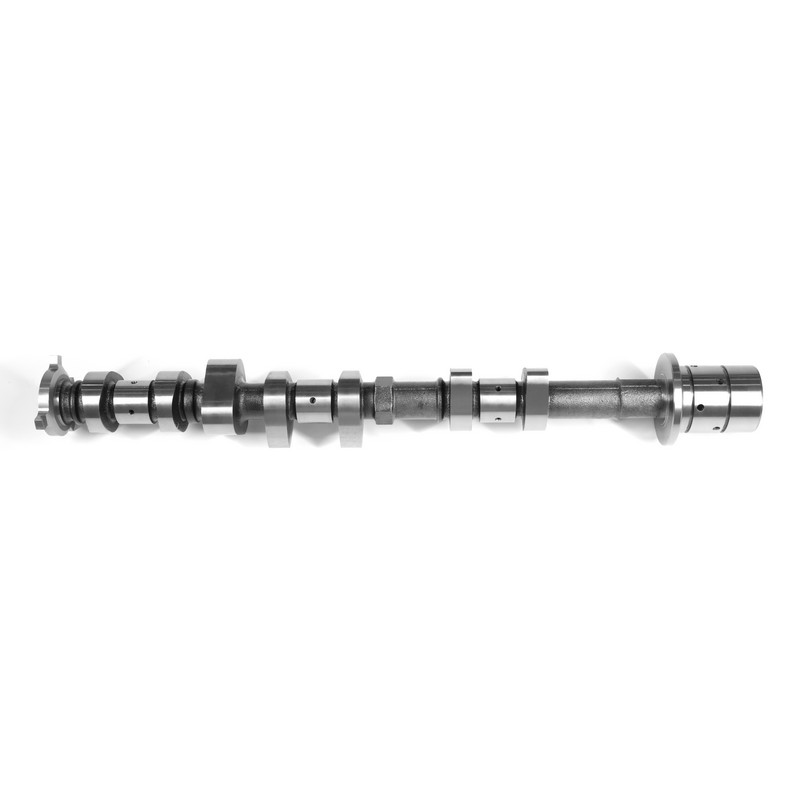 Wholesale Car camshaft-FORD-BL3Z6250D Suppliers, Manufacturers, CompanyANHUI KORBOR MACHINERY CO., LTD. Is China Wholesale FORD-Car camshaft-BL3Z6250D Suppliers, Manufacturers And Company, We Offer FORD-Car c...View Product →
Typical symptoms are a rhythmic tapping noise from the valve cover area, rough idle, reduced power above 3,500 rpm, and diagnostic trouble codes for camshaft or crankshaft correlation such as P0340 or P0016. A visual inspection of the lobes will show scoring, pitting, or flattened profiles.
A reground camshaft recycles the original core and removes material to restore the profile; it is cheaper and useful in some rebuilds, but it cannot improve the original material hardness or geometry. A new manufactured camshaft starts from fresh blanks with controlled alloy chemistry, full heat treatment, and CNC profile grinding, giving consistent hardness and longer expected service life.
Yes. Gasoline engine camshafts are generally sized for higher rpm and lighter valve-train loads, with shorter duration profiles to preserve idle quality. Diesel camshafts carry heavier drive-side loads and are designed for different injection and combustion timing. Material and hardening choices also differ because diesel engines operate at higher cylinder pressures.
The automotive industry benchmark is IATF 16949, the international quality management system standard for automotive production parts. Supporting evidence includes hardness-test reports, runout inspection records, batch traceability codes, and audit documentation of upstream casting and heat-treatment processes.
provide one-stop service from blank casting to finished product finishing, fundamentally control product stability, to ensure delivery.

 English
 中文简体
 русский
 Español




 闽公网安备35018102000203号
