Article Directory
Engine timing lives or dies on one component most drivers never see: the camshaft. Whether it is opening intake valves at exactly the right crank angle or holding up under sustained high RPM, a FORD camshaft sets the pace for how an engine breathes, performs, and ages. This guide covers how camshafts work, how they are built, and how to choose the right one for replacement or upgrade.
A FORD camshaft is a rotating shaft fitted with precision-machined lobes that push open the intake and exhaust valves at exact points in the engine cycle. This is the core FORD camshaft function: converting rotational motion from the crankshaft, via a belt, chain, or gear drive, into the precise valve movement an engine needs to run.
The engine camshaft timing system links crank rotation to valve position so intake and exhaust events happen in the correct sequence, every cycle, at every RPM. Each lobe shape defines the valve timing mechanism for its corresponding valve — how far it opens, how long it stays open, and how quickly it closes. Together, these lobes and their supporting hardware make up the internal combustion camshaft operation that ultimately governs airflow in and out of the cylinder.
What a FORD camshaft is used for in engines goes beyond simply opening valves — it also affects idle quality, power delivery, and emissions behavior. Alongside pushrods, rocker arms, and valve springs, the camshaft is one of the central engine valve train components, and how camshaft controls engine valve timing directly shapes the role of camshaft in Ford engine performance across the entire operating range.
Camshaft design varies by engine layout, driving purpose, and whether the part is original equipment or an aftermarket upgrade.
| Type | Configuration | Typical Purpose |
| Overhead camshaft (OHC) | Single cam per cylinder head | Compact, efficient valve actuation |
| Double overhead camshaft (DOHC) | Two cams per cylinder head | Separate intake and exhaust control |
| Hydraulic camshaft lifter system | Hydraulic lifters between cam and valve | Quieter operation, automatic clearance |
| Performance camshaft (aftermarket) | Custom lift and duration profile | Increased airflow and power output |
| OEM replacement camshaft | Factory-matched specification | Direct, like-for-like replacement |
The types of Ford camshafts and differences between them mostly come down to how intake and exhaust are separated and controlled. In a DOHC vs SOHC camshaft comparison, DOHC layouts use two shafts for independent intake and exhaust timing, while single overhead designs manage both with one shaft and a simpler rocker arrangement. Performance camshaft vs OEM camshaft differences center on lobe profile: OEM parts prioritize smoothness and longevity, while performance grinds trade some low-RPM manners for stronger high-RPM breathing.
Camshafts appear across the full Ford engine lineup, from efficiency-focused turbocharged engines to heavier-duty diesel platforms.
Ford engine camshaft applications in EcoBoost engines lean on tighter tolerances to support turbo boost response, while camshaft use in Ford diesel and gasoline engines differs mainly in lobe profile and material toughness. Where camshafts are used in the Ford engine lineup ultimately depends on the balance a given vehicle needs between economy, torque, and long-term durability.
Consistent valve timing precision cycle after cycle, without drift as the engine heats up.
High RPM stability that keeps valve control accurate under sustained load.
A wear resistant camshaft surface that holds its profile over years of contact with lifters or followers.
Contributes to fuel efficiency engine tuning by supporting clean, predictable combustion timing.
How camshaft affects engine performance comes down to how faithfully it reproduces its designed lift and duration profile across the engine's full operating range. The importance of camshaft timing accuracy in Ford engines shows up most clearly at high RPM, where even small deviations can affect power delivery and emissions. Performance benefits of an upgraded camshaft typically appear as improved throttle response and top-end airflow, though these gains only hold if engine performance optimization also accounts for supporting components like valve springs and lifters.
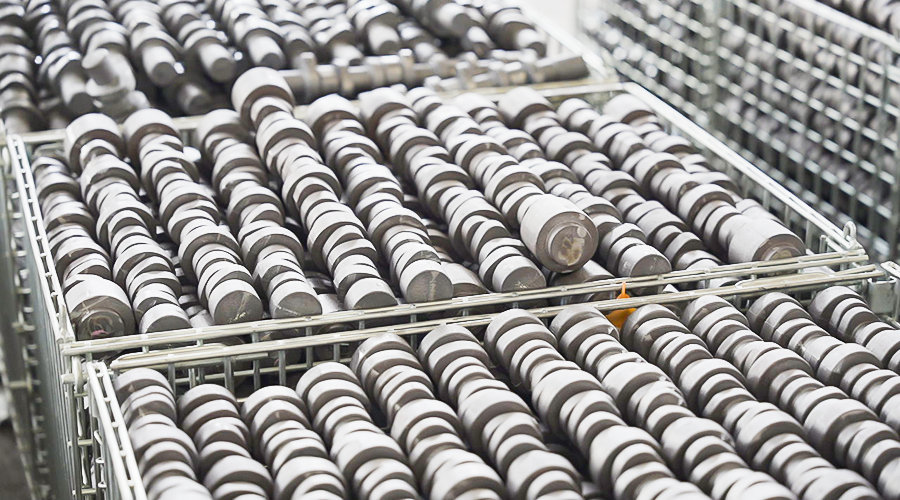
Material selection — a forged steel camshaft process starts with billet steel chosen for strength and fatigue resistance.
Casting alternative — cast camshaft production uses molded iron for lower-stress applications at reduced cost.
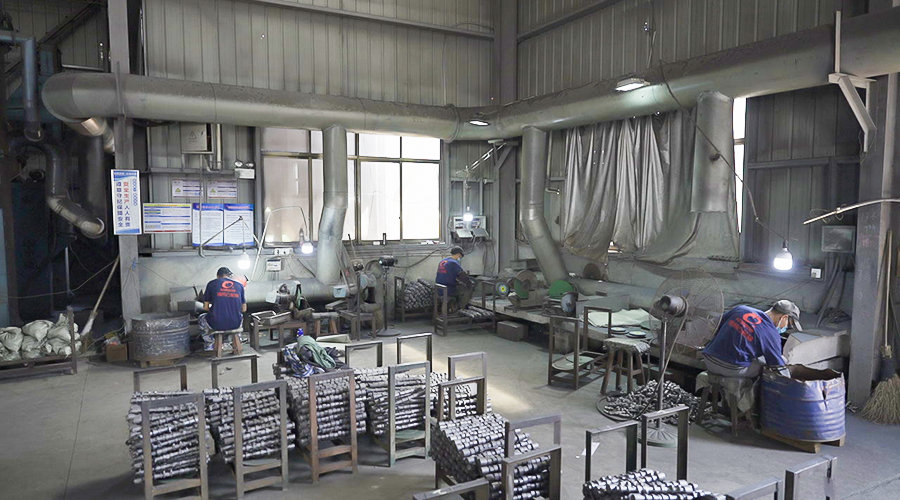
Profile machining — CNC machining cam profile shapes each lobe to exact lift and duration specifications.
Heat treatment — the heat treatment process camshaft undergoes locks in hardness and dimensional stability.
Surface finishing — surface hardening cam lobes receive final treatment for long-term wear resistance.
How Ford camshafts are made generally follows this same sequence, whether the part is forged for durability or cast for cost efficiency. The manufacturing process of automotive camshafts places heavy emphasis on dimensional accuracy, since even small profile errors compound into measurable timing drift. Heat treatment in camshaft production is what allows a relatively simple steel or iron shape to survive millions of high-speed valve actuations without losing its profile.
A camshaft rarely fails without warning. Catching early symptoms prevents a small issue from turning into a full engine rebuild.
Camshaft wear and tear typically develops gradually, often linked to oil quality and change intervals rather than a single sudden event. An engine ticking noise from the camshaft area is one of the most common early warning signs, usually tied to lifter clearance or lobe surface wear. Oil lubrication failure in the engine accelerates this process quickly, since camshaft lobes depend on a constant oil film to prevent metal-to-metal contact.
Cam lobe damage from lubrication failure or debris contamination often shows up as uneven idle or reduced power at specific RPM ranges. Timing misalignment symptoms — including rough running, misfires, or a check engine light — point to a camshaft or drive component that has shifted out of its correct position. Signs of a bad camshaft in a Ford engine usually combine more than one of these symptoms at once, which is why what causes camshaft wear in engines is worth understanding before diagnosing the exact failure point. Camshaft failure symptoms and diagnosis generally start with a physical inspection of the lobes and drive components once these signs appear.
How to choose a Ford camshaft for replacement starts with confirming whether the goal is restoring stock behavior or chasing more output. A performance camshaft selection guide for Ford engines will usually weigh lift and duration against drivability, since more aggressive profiles trade smooth idle for higher-RPM airflow. On the question of OEM vs aftermarket camshaft, which is better depends entirely on the intended use — OEM for predictable daily driving, aftermarket when a specific performance target justifies the tradeoffs.
Moderate camshaft lift and duration comparison values, tuned for smooth idle and broad torque.
Prioritizes engine torque over peak horsepower, favoring everyday drivability.
Longer duration and higher lift, part of most aftermarket engine modification parts lineups.
Shifts the valve timing performance upgrade toward higher-RPM horsepower.
Stock vs performance camshaft differences mainly show up in how long the valve stays open and how high the engine needs to spin before the profile works in the driver's favor. How a performance camshaft improves horsepower comes down to allowing more airflow at higher RPM, often at the cost of some low-end torque. A racing camshaft profile pushes this trade further still, and camshaft upgrades for Ford engines should always be selected with the vehicle's actual use case in mind rather than specification numbers alone.
Camshaft design is steadily shifting toward systems that adjust valve behavior in real time rather than relying on a single fixed lobe profile.
The future of camshaft technology in Ford engines points toward tighter integration between mechanical timing and electronic control rather than a wholesale replacement of the camshaft itself. VVT systems and camshaft innovation already blend the two approaches, adjusting phase angle without discarding the physical lobe. Whether camshafts will be replaced by electronic valves remains open, but for now hybrid mechanical-electronic systems are the more practical path forward.
 |
 |
A rotating engine component with precision-machined lobes that open and close intake and exhaust valves in a set sequence.
It converts rotational motion from the crankshaft into precisely timed valve movement for every cylinder.
With regular oil changes and proper lubrication, a camshaft is designed to last for the useful life of the engine.
Poor lubrication, contaminated oil, and worn lifters or followers are the most common causes.
Yes, a worn or misaligned camshaft can cause power loss, rough idle, and misfires.
OEM camshafts restore factory behavior, while performance camshafts use a modified profile to increase airflow and power.
provide one-stop service from blank casting to finished product finishing, fundamentally control product stability, to ensure delivery.

 English
 中文简体
中文简体 русский
 Español



 闽公网安备35018102000203号