Article Directory
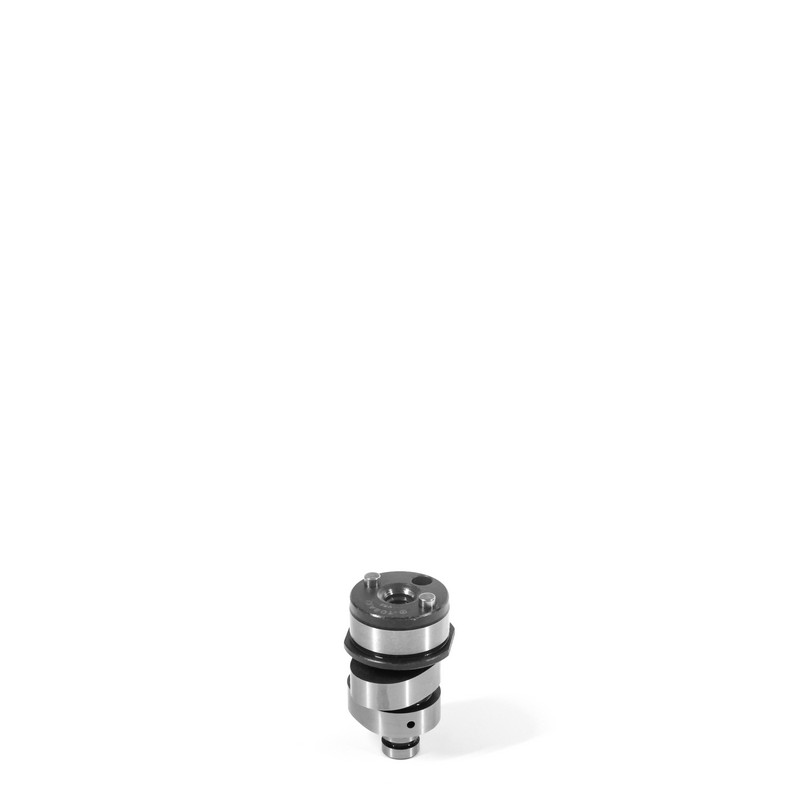
For engineering professionals and high-performance distributors, the Coyote V8 engine represents a pinnacle of modular overhead cam design. To unlock its full potential, selecting the correct ford racing camshafts is the most decisive factor in shifting the power band. Anhui KORBOR Machinery Co., Ltd., a premier manufacturer with 25 years of specialized experience and a 28,000-square-meter production base, understands that a camshaft is not just a part, but the "brain" of engine gas exchange. By utilizing high-performance alloys and advanced heat treatments like carburizing and quenching, we ensure that every performance camshaft for Coyote 5.0 engines maintains high-precision valve timing under extreme RPM loads, adhering to the strict IATF16949:2016 quality standards.
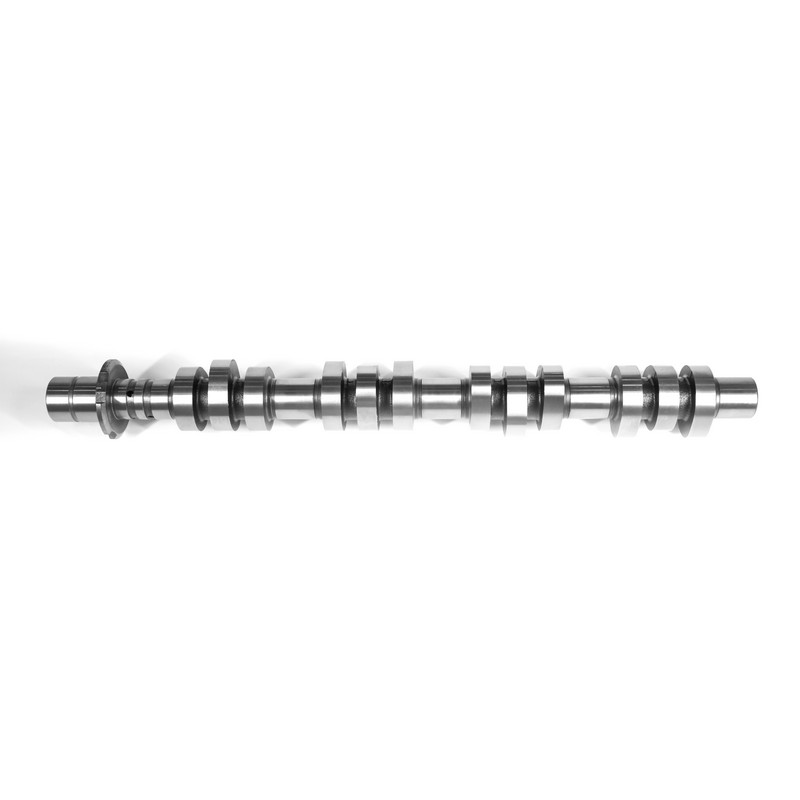
On a naturally aspirated (NA) Coyote engine, the relationship between horsepower and torque is a zero-sum game dictated by volumetric efficiency. Installing ford racing camshafts with increased duration allows the intake valves to remain open longer, favoring high-RPM airflow. According to the 2024 Global Automotive Engine Components Market Report by the Society of Automotive Engineers (SAE), the trend in high-performance valvetrain design has shifted toward reducing frictional losses by up to 15% through precision grinding and specialized alloy selection. This technical breakthrough allows a high lift racing camshaft for NA engines to extend the horsepower peak further into the 7,500+ RPM range while minimizing the parasitic drag that typically compromises idle stability.
Source: SAE International - 2024 Engine Component and Efficiency Trends
While a stock camshaft provides a broad, flat torque curve ideal for street drivability, a specialized racing profile trades low-end "grunt" for massive top-end breathing capacity. The following table illustrates the typical shifts observed when moving to a more aggressive profile.
| Specification | Standard OEM Profile | High lift racing camshaft for NA engines |
| Peak Torque RPM | 3,500 - 4,500 RPM | 5,000 - 6,000 RPM |
| Peak Horsepower RPM | 6,000 - 6,500 RPM | 7,200 - 8,000+ RPM |
| Idle Quality | Smooth / Consistent | Aggressive / Lopey |
| Volumetric Efficiency | Optimized for mid-range | Optimized for high-velocity top-end flow |
The modern Coyote engine utilizes Ti-VCT, which complicates the selection of ford racing camshafts. Engineers must choose profiles that respect the physical limits of piston-to-valve clearance while utilizing the 50 degrees of phaser movement available. A custom grind camshaft for Ford V8 applications allows for specific lobe separation angles that can mitigate the "torque dip" often found in the 3,000 RPM range when using large-duration cams. At Anhui KORBOR, we utilize multi-level quality control and "zero defect" production concepts to ensure that the phaser mounting surfaces and oil galleries are machined to micron-level tolerances, ensuring the Ti-VCT system functions flawlessly under racing conditions.
In high-RPM NA engines, the stress on the cam lobes is exponential. Using ford racing camshafts manufactured from inferior blanks can lead to surface galling or catastrophic snapping. High-carbon alloy steels treated with tempered quenching offer a significantly higher fatigue limit than standard cast iron alternatives. This is especially critical when running stage 3 camshafts for high RPM performance, where spring pressures are increased to prevent valve float.
| Property | Cast Iron (Standard) | KORBOR High-Performance Alloy |
| Surface Hardness | Moderate | High (Enhanced by Quenching) |
| Wear Resistance | Standard | Superior (Carburized Surface) |
| Fatigue Strength | Low - Medium | High (Capable of 8,000+ RPM cycles) |
| Weight-to-Strength | Heavy | Optimized for high-speed rotation |
As one of the top manufacturers in the country, Anhui KORBOR Machinery Co., Ltd. delivers over 2.3 million sets of products annually. For B2B partners looking for wholesale racing camshafts for Ford engines, our 1-stop service—from blank casting to finished products—guarantees punctual delivery and stable quality. We understand that in the racing world, "close enough" isn't an option. Our 22,000-square-meter plant is optimized for high-precision mass production, ensuring that whether you are installing a single performance camshaft for Coyote 5.0 engines or stocking an entire distribution network, the technical specifications remain identical across every batch.
Yes. Any performance camshaft for Coyote 5.0 engines alters the airflow characteristics significantly. A professional tune is required to adjust fuel maps, spark timing, and Ti-VCT tables to account for the new volumetric efficiency curve.
While possible, stage 3 camshafts for high RPM performance are designed for maximum power at the top of the tachometer. This often results in a loss of low-end torque and a rougher idle, which may be less desirable for stop-and-go city driving.
A custom grind camshaft for Ford V8 can be tailored to your specific cylinder head flow, intake manifold, and exhaust setup, ensuring the torque peak occurs exactly where your gear ratios require it.
We provide a 1-stop service. We handle everything from the initial blank casting using high-performance alloys to the final high-precision grinding and heat treatment.
In most cases, no. High lift racing camshaft for NA engines profiles usually exceed the maximum lift capacity of OEM springs, requiring upgraded springs to prevent coil bind and valve float at high RPMs.

 English
 中文简体
中文简体 русский
 Español



 闽公网安备35018102000203号