Article Directory
For performance enthusiasts, the "chop" or "loppy" idle of a high-performance engine is the ultimate auditory signature of power. Achieving this sound through ford racing camshafts requires a delicate balance between mechanical valve timing and electronic engine management. While high-lift profiles offer the desired aesthetic, they often create low manifold vacuum, which can wreak havoc on factory Engine Control Units (ECUs). Anhui KORBOR Machinery Co., Ltd., with 25 years of specialized experience since 1999, understands the intricate metallurgy and precision required to manufacture these components. Operating out of our 28,000 square meter facility in the Susong Economic Development Zone, we utilize IATF16949:2016 standards to produce high-precision ford racing camshafts. This article provides an engineering perspective on selecting profiles that deliver an aggressive loppy idle camshaft sound while maintaining stable camshaft ECU compatibility.
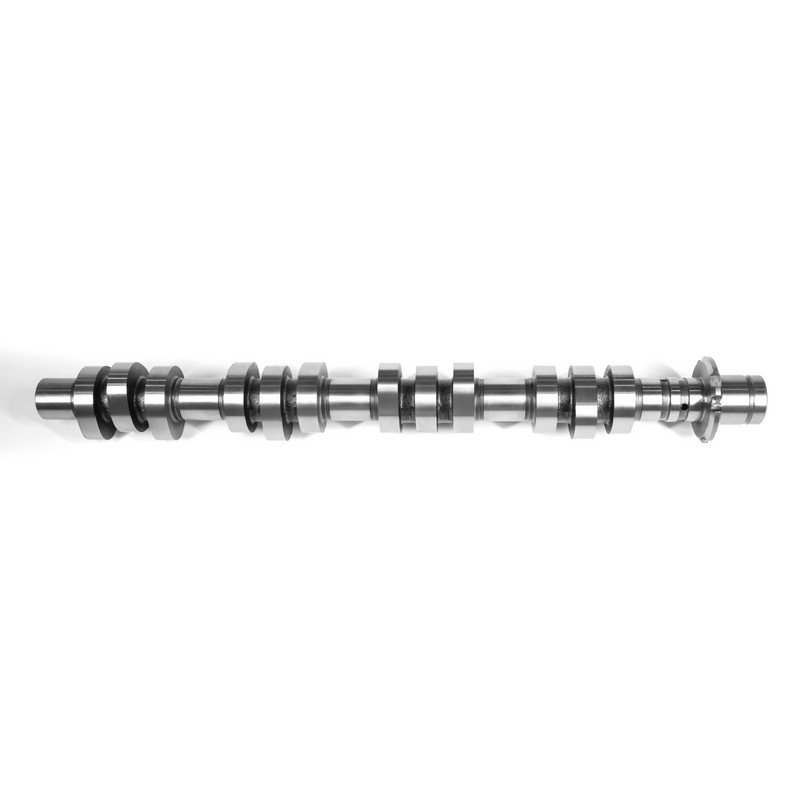
The aggressive idle sound is a byproduct of valve overlap—the period when both intake and exhaust valves are open simultaneously. Ford racing camshafts with a narrower Lobe Separation Angle (LSA) increase this overlap, creating the rhythmic "lopping" effect. However, excessive overlap reduces intake manifold vacuum, which is a primary input for speed-density based ECUs. When comparing hydraulic roller vs solid roller Ford cams, hydraulic rollers are generally preferred for street-driven racing applications as they provide a stable racing camshaft idle quality without requiring constant valve lash adjustments. Understanding how lobe separation angle affects idle is critical; an LSA of 110-112 degrees typically provides that sought-after chop while keeping vacuum high enough for the ECU to maintain a steady idle target.
| Camshaft Variable | Effect on Sound | Effect on ECU Stability |
| Increased Overlap | Aggressive, choppy "Lope" | Reduced vacuum; may require custom tuning |
| Higher Lift | Deeper exhaust note | Minimal impact (if duration is moderate) |
| Narrower LSA | Classic racing "Chop" | Increased risk of "hunting" idle |
High-performance ford racing camshafts are subjected to extreme frictional loads and spring pressures. To prevent premature lobe wear, Anhui KORBOR selects high-performance alloys and implements advanced camshaft heat treatment processes such as carburizing, quenching, and tempering. This ensures that even the most aggressive loppy idle camshaft retains the hardness required for a "zero defect" lifecycle. For those installing ford racing camshafts on 5.0L engines, the metallurgical integrity of the distributor gear and lobe surface is paramount. Our 1-stop service, from blank casting to finished product, ensures that high lift racing camshafts for Ford maintain the camshaft wear resistance needed to survive high-RPM racing environments while providing stable performance in working environments.
To avoid the "Check Engine" light when running ford racing camshafts, engineers must look at camshaft vacuum requirements for power brakes and sensors. Modern Ford ECUs can be sensitive to the "hunting" idle caused by aggressive profiles. The best ford racing camshafts for street use are those that utilize "asymmetrical lobes," which open the valve quickly but close it gently to maintain seat life and idle stability. By optimizing Ford engine timing with racing cams, tuners can often compensate for low vacuum by adjusting the idle spark adder and air-bypass tables. KORBOR's diversified solutions cover more than 800 automotive models, ensuring that our stable quality camshafts provide the racing camshaft idle quality enthusiasts crave without triggering fail-safe modes in the vehicle's computer.
| Feature | Stage 1 Racing Cam | Stage 2/3 Aggressive Cam |
| Idle Characteristics | Slightly noticeable lope | Very aggressive, "choppy" idle |
| ECU Compatibility | Excellent (Plug & Play) | Requires PCM recalibration |
| Vacuum Level | 15-18 in/Hg | 10-14 in/Hg (Brake booster sensitive) |
Selecting the right ford racing camshafts is an exercise in engineering trade-offs. To achieve the most aggressive loppy idle without compromising ECU stability, a camshaft with moderate duration but a tight LSA (110-112 degrees) and high lift is the professional's choice. At Anhui KORBOR Machinery Co., Ltd., we combine 25 years of innovative power with exquisite craftsmanship to produce 2.3 million sets of camshafts annually. We are committed to helping customers achieve greater success through mature technology and diversified solutions. From raw casting to the final polished lobe, KORBOR is your ideal partner in the automotive engine field, ensuring that every ford racing camshafts batch delivers world-class performance and the perfect racing sound.
The sound is caused by "overlap," where the intake and exhaust valves stay open at the same time. This causes a small amount of exhaust gas to dilute the fresh intake charge at low RPM, creating the irregular, choppy combustion rhythm known as a lope.
In most cases, an aggressive cam will require a tune to adjust the "idle air integrator" and "spark timing" to prevent the engine from stalling or "hunting" for a steady idle due to low manifold vacuum.
Heat treatments like carburizing and quenching significantly increase the camshaft wear resistance. Without these processes, the high spring pressures required for racing cams would flatten the lobes in a matter of hours.
On Ford engines, a narrower LSA (e.g., 108°) increases overlap and lope but reduces low-end vacuum. A wider LSA (e.g., 114°) is smoother and easier for the ECU to manage but results in a tamer idle sound.
By following IATF16949:2016 standards and utilizing high-precision mass production, we ensure that every cam lobe is ground to exact specifications, allowing tuners to rely on consistent timing data across all cylinders.

 English
 中文简体
中文简体 русский
 Español



 闽公网安备35018102000203号