Article Directory
An engine builder puts two camshafts on the bench for the same 2.0L four-cylinder rebuild. One arrives in an OEM box at a list price of $320. The other, labeled as a stock-replacement aftermarket part, costs $145. They look identical until you measure journal hardness, inspect the lobe finish under magnification, and check the timing marks. Those measurements are the real difference between OEM and aftermarket camshafts.
An OEM camshaft is manufactured to the vehicle maker's exact specification inside the original supply chain; an aftermarket camshaft is produced by an independent manufacturer outside that chain.
OEM stands for Original Equipment Manufacturer. In engine terms, it means the part is built to the same drawings, alloy selection and tolerance limits as the original component in the vehicle. It is a supply-chain classification, not a quality rating.
Definition: a genuine OEM camshaft is made to factory drawings, materials and tolerances; an aftermarket camshaft is any camshaft made outside the OEM contract supply chain, for replacement, repair or performance use.
Aftermarket camshafts split into two tiers: stock-replacement parts that replicate the factory profile, and performance parts that deliberately change lift, duration or lobe separation to move the power curve. Comparing OEM versus aftermarket therefore puts one fixed specification against a very wide product spectrum.
A camshaft's service life is decided before grinding starts, by the alloy grade and the heat treatment cycle applied to the blank.
Factory camshafts use materials selected for the duty cycle: chilled cast iron for mainstream engines, hardened alloy or forged steel for high-output units. Carburizing, nitriding or induction hardening brings the journal surface to a specified hardness window. The result is predictable wear behavior across the engine's service life.
Budget aftermarket camshafts often rely on low-cost iron castings with minimal heat treatment. They can pass a visual check while the lobes flatten in tens of thousands of kilometers under the same valve spring load.
A camshaft fails because the material or heat treatment was under-specified, not because the grinding wheel was off by a micron.
A quality aftermarket manufacturer applies the same logic as an OEM. Anhui KORBOR Machinery Co., Ltd. (KORBOR) combines high-performance alloy selection with tempering, carburizing and quenching on its own heat-treatment lines.
| Property | Genuine OEM | Quality Aftermarket | Budget Aftermarket |
| Alloy base | Specified alloy per factory drawing | Verified alloy, equal or better than the blank | Unspecified cast iron, lowest cost |
| Heat treatment | Carburizing, nitriding or quenching to spec | Controlled carburizing, quenching and tempering | Minimal or inconsistent hardening |
| Journal hardness | 45-58 HRC depending on application | 48-58 HRC common on steel blanks | 38-45 HRC typical |
| Surface finish | Ground and polished to tolerance | CNC ground and microfinished | As-cast or light finish |
| Batch consistency | Very high, fully traceable | High under IATF 16949 | Variable between batches |
Quality control is where a reputable aftermarket manufacturer closes the gap with OEM, and it is where an unverified budget part becomes a liability.
An OEM part sits inside a production part approval process with statistical process control and full traceability. A certified aftermarket supplier runs the same disciplines. An uncertified workshop does not.
KORBOR has manufactured camshafts continuously for more than 25 years. Its plant in Anqing covers 28,000 square meters with 22,000 square meters of production space, and it operates under IATF 16949:2016 with a zero-defect philosophy and multi-layer inspection at every process step.
Over 2.3 million camshaft sets are shipped per year under a single documented quality system.
Before you compare part prices, compare quality systems. A supplier that can show certification and plant-wide inspection on request is already in a different category from one that can only show a spreadsheet. The full process is documented in the quality assurance process at KORBOR.
An OEM camshaft drops in because the timing marks, journal diameters and lobe profile were designed as one system; an aftermarket camshaft must be verified against the same data points before installation.
Check these five points on any non-OEM camshaft:
Fitment rule: measure timing mark position, journal OD, runout and lobe lift against the factory drawing before installing any non-OEM part.
These five checks take about 15 minutes with a micrometer, a dial indicator and the engine data sheet. Skipping them is what turns a good replacement part into a failed engine.
Hardness is a quick quality screen at the same time. The chart below compares typical journal hardness ranges across the three camshaft categories.
Hardness alone does not guarantee durability, but a part at 38-42 HRC under a high-rate valve spring wears measurably faster than one above 50 HRC.
Consistent geometry at this level is only achievable with controlled machining. The CNC grinding lines at the KORBOR factory hold journal roundness and lobe profile within factory-type tolerance before final inspection.
Expect a 30 to 50 percent saving on a quality aftermarket camshaft compared with a dealer-sourced OEM part; the extra OEM cost is mostly distribution and brand markup, not material.
These numbers matter because the saving is real only if the part performs to specification. A budget part that fails inside a year costs more than the OEM part you avoided, once labor and downtime are added.
Catalog depth changes the calculation too. When a factory part is discontinued or back-ordered for weeks, aftermarket supply is the only option, not a discount option. Stock-profile examples such as the KORBOR Ford camshaft KB258 exist precisely to cover factory-type applications without the dealer price tag.
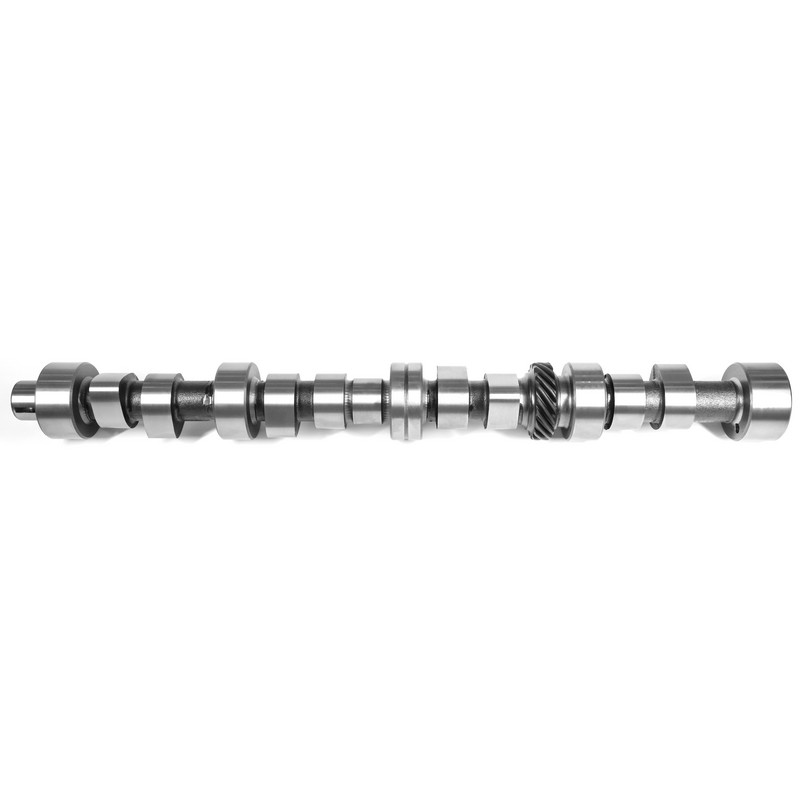 Wholesale Car camshaft-FORD-C7NN6250B Suppliers, Manufacturers, CompanyANHUI KORBOR MACHINERY CO., LTD. Is China Wholesale FORD-Car camshaft-C7NN6250B Suppliers, Manufacturers And Company, We Offer FORD-Car c...View Product →
Value check: if an aftermarket part is priced more than 40 percent below the market average, demand a material certificate and a hardness record before you place the order.
Choose a genuine OEM camshaft when the engine must remain factory-stock or when warranty conditions require original parts; choose an aftermarket camshaft when price, availability or a performance change matters more.
| Criterion | OEM Camshaft | Aftermarket Camshaft |
| Warranty-sensitive repair | Preferred, protects coverage | Acceptable from certified suppliers |
| Performance upgrade | Limited to factory grinds | Wider lift and duration range |
| Discontinued engines | Hard to source, premium price | Often the only practical source |
| Budget rebuild | Highest parts cost | 30-50% lower parts cost |
| Factory restoration | Best authenticity | Good when full documentation exists |
Availability can be the decisive factor. If a VW factory part is back-ordered for weeks, a replacement such as the KORBOR VW camshaft KB562 can keep the build schedule alive.
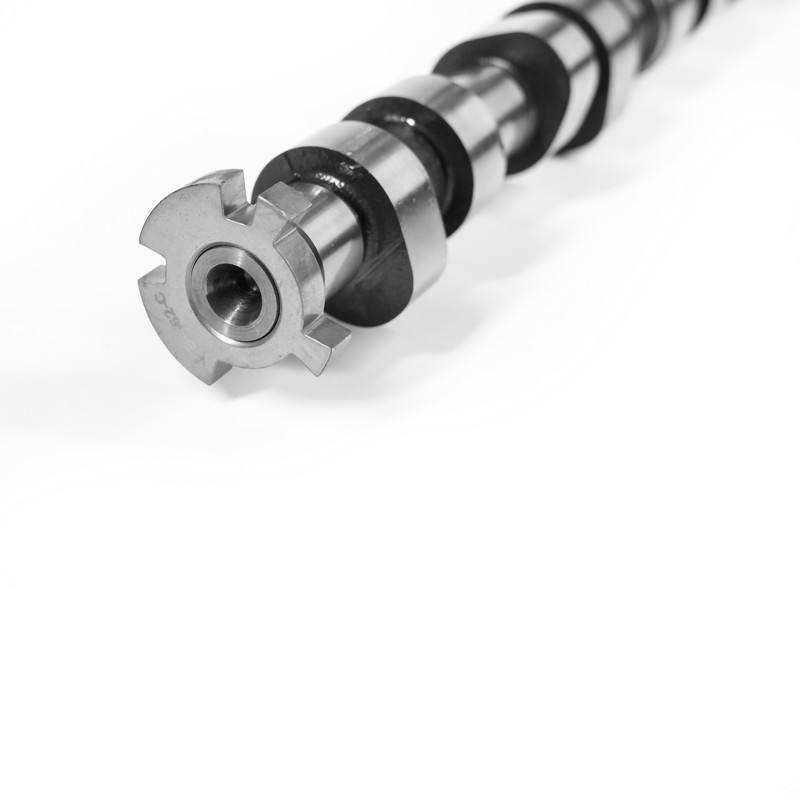 Wholesale Car camshaft-VW-032109101AG Suppliers, Manufacturers, CompanyANHUI KORBOR MACHINERY CO., LTD. Is China Wholesale VW-Car camshaft-032109101AG Suppliers, Manufacturers And Company, We Offer VW-Car cam...View Product →
Practical rule: OEM protects the warranty; aftermarket protects the budget and the build schedule, when the supplier is certified and the part record is verifiable.
Verify three things before ordering: the supplier's quality certification, the material and heat treatment specification, and the inspection record for the exact part number.
Ask specifically whether the blank is cast, forged or machined from bar stock. That answer tells you how the grain flows and how the part behaves under impact loads.
Sourcing rule: no alloy grade, no heat treatment data, no part-specific inspection record, no order.
When the exact profile does not exist in the catalog, a custom grind is the answer. KORBOR's customization and tailored solutions cover modified profiles and special applications, so the OEM-versus-aftermarket question becomes a geometry question rather than a sourcing dead end.
Finally, request the runout and hardness certificate for the part number you intend to buy. If a Nissan camshaft like the KORBOR Nissan camshaft KB247 is on your order list, the same rule applies: the part record is part of the purchase.
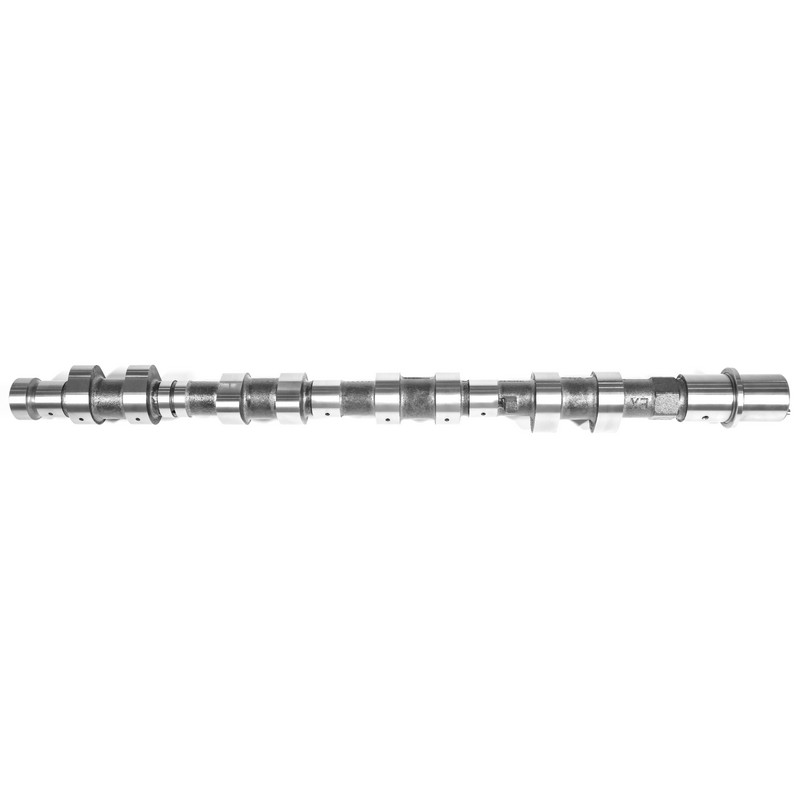 Wholesale Car camshaft-NISSAN-13020AD212 Suppliers, Manufacturers, CompanyANHUI KORBOR MACHINERY CO., LTD. Is China Wholesale NISSAN-Car camshaft-13020AD212 Suppliers, Manufacturers And Company, We Offer NISSAN-...View Product →
Quick answers to the questions buyers ask most when comparing OEM and aftermarket camshafts.
A quality aftermarket camshaft can match OEM reliability because it uses the same alloy classes, the same heat treatment steps and the same inspection equipment. Parts that fail early come from suppliers without certification or documented process control.
Yes. Incorrect lobe geometry, timing marks or journal tolerances can bend valves, cause piston-to-valve contact, or starve the valvetrain of oil. Measuring the part against the factory drawing before installation prevents all three failure modes.
OEM pricing includes the vehicle maker's brand markup, distribution network and warranty liability, not just machining cost. A certified aftermarket supplier can match the production standard for 30 to 50 percent less because it sells through industrial channels.
Read the certificate. If the supplier can produce a document with the alloy grade, hardness range, runout, straightness, timing mark offset and journal OD for the exact part number, the part has a controlled process behind it. If no data sheet exists, neither does the process.
provide one-stop service from blank casting to finished product finishing, fundamentally control product stability, to ensure delivery.

 English
 中文简体
中文简体 русский
 Español



 闽公网安备35018102000203号