Article Directory
Machining tolerances on a camshaft lobe are routinely held to a few hundredths of a millimeter, yet a lobe profile that is only slightly off can change an engine's idle quality, pulling power, and fuel economy. That is why the camshaft is often described as the mechanical brain of the valvetrain. In a four-stroke engine, the crankshaft turns twice for every complete combustion cycle, while the camshaft turns once. The lobes on the camshaft decide exactly when each intake and exhaust valve opens, how far it opens, and how long it stays open.
So the simplest answer to the question "what is an automobile camshaft" is this: it is the engine component that converts rotation into precisely timed valve motion. Its lobe geometry and machining quality determine how the engine breathes at every crankshaft speed, and everything else (horsepower, torque curve, idle stability, emissions) follows from that basic job.
Physically, a camshaft is a long shaft with one eccentric lobe for each valve, plus bearing journals spaced along its length. The lobes are not round; each one has a base circle, a ramp, and a nose. As the shaft rotates, each lobe pushes against a follower, a rocker arm, or a valve tappet. The valve lifts against its spring, and when the lobe rotates further, the spring closes the valve. This rotary-to-reciprocating conversion is the mechanism every piston engine depends on, which is why the lobe profile is the most important design element of the entire valve train.
Four parameters describe what a lobe actually does:
The same four numbers appear on every serious camshaft specification sheet, whether the part is for a compact city car or a large-displacement engine.
A four-stroke engine fires each cylinder once every two crankshaft revolutions, so the camshaft is driven at a fixed 2:1 ratio relative to the crankshaft through a timing belt, chain, or gear set. Valve timing therefore stays locked to piston position. Any slip, stretch, or tooth skip in the drive system disturbs that relationship and immediately shows up as idle problems, misfires, or unusual valvetrain noise.
Where the camshaft sits changes the valvetrain structure, and it also changes how maintenance and replacement are done. Production automobile engines mainly use three layouts.
| Layout | Camshaft location | Primary moving parts | Typical application |
|---|---|---|---|
| OHV (pushrod) | Inside the engine block | Pushrods and rocker arms | Large-displacement V8s and workhorse engines |
| SOHC | One cam in the cylinder head | Followers or small rocker arms | Economy cars and light trucks |
| DOHC | Two cams per cylinder head | Direct-acting bucket or finger followers | Most modern passenger cars with four valves per cylinder |
Single overhead cam engines keep the cam close to the valves and reduce moving mass, while double overhead cam heads allow four valves per cylinder and make variable valve timing easier to package. Most modern passenger cars use DOHC for that reason. In many DOHC engines, a variable valve timing phaser rotates the intake cam slightly relative to the crankshaft to widen the useful power band. The phaser and the camshaft position sensor trigger wheel add two compatibility points that a replacement camshaft must match.
The lobe of a camshaft works under concentrated contact pressure at the follower or rocker interface, while the shaft also carries twisting and bending loads from firing pulses. That is why material selection and heat treatment matter more than the part's appearance. A camshaft that looks perfectly normal can fail early if the surface hardness is too low or the hardened layer is uneven.
| Material | Surface treatment | Strength and durability | Typical application |
|---|---|---|---|
| Chilled cast iron | Chill-hardened lobe surfaces in the casting process | Good wear resistance at moderate cost | Mass-produced passenger car camshafts |
| Nodular (ductile) cast iron | Hardening, nitriding, or induction hardening | Higher toughness and good fatigue life | Loaded engines and diesel applications |
| Forged steel or billet | Carburizing or nitriding | Highest strength and consistent material quality | Performance and high-load engines |
Production camshafts are usually specified with a hardness range rather than a simple minimum, because a lobe that is too hard can wear the followers, while a lobe that is too soft scuffs quickly. After more than 25 years of camshaft-only production, we treat material verification and heat treatment control as a single system. KORBOR runs the complete process from blank casting to finished machining, so every batch is measured against the same internal standards.
Because we ship more than 2.3 million camshaft assemblies every year, sample inspections alone are not enough. We follow IATF 16949:2016 with a zero-defect production policy, which places quality control inside every workstation rather than at the end of the line. Our documented quality control routines cover hardness testing, dimensional inspection, lobe profile verification, and runout checks on every lot.
A camshaft that is properly lubricated and correctly manufactured can last the full service life of a typical engine. Failures appear when oil supply is interrupted, the oil is contaminated, valve spring pressure is excessive, or heat treatment is marginal. Lobe wear is the most common failure mode; pitting, scuffing, and flattened lobes first show up as a metallic ticking noise from the top of the engine.
A failed camshaft is rarely an isolated part. When you replace it, inspect the followers, lifters, pushrods, and timing drive at the same time, because the wear pattern points to what else is stressed. Also verify the journal runout and the straightness of the shaft; a slightly bent camshaft causes binding, accelerated bearing wear, and erratic variable valve timing behavior. For many mainstream applications the geometry is already well defined, so an OEM-compatible unit such as the KB014 Toyota camshaft is a dependable starting point for a standard repair.
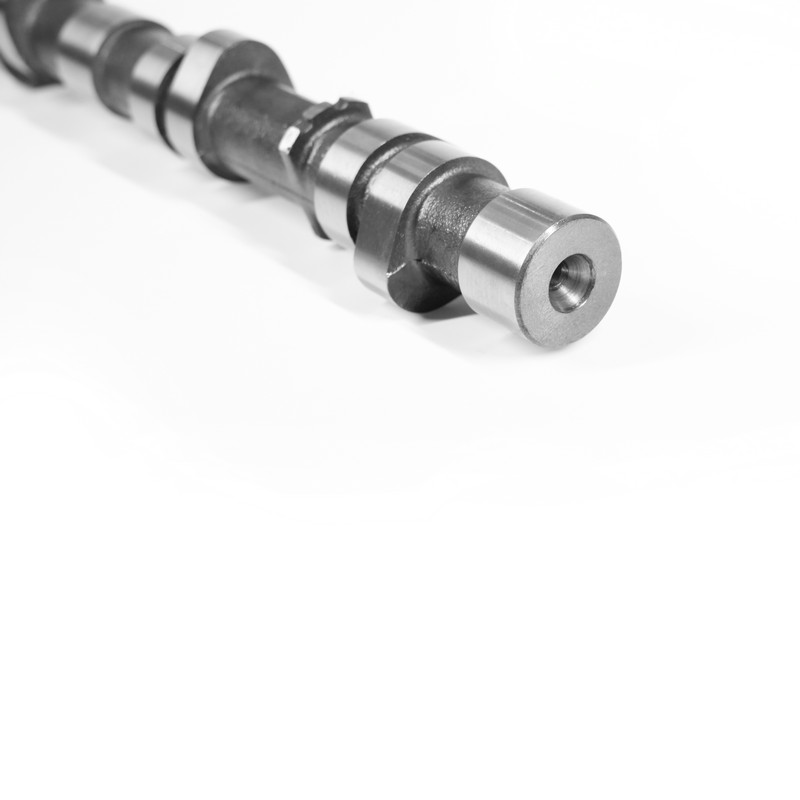 Wholesale Car camshaft-TOYOTA-KB-014 Suppliers, Manufacturers, CompanyANHUI KORBOR MACHINERY CO., LTD. Is China Wholesale TOYOTA-Car camshaft-KB-014 Suppliers, Manufacturers And Company, We Offer TOYOTA-Car ...View Product →
The right replacement camshaft must do three things: match the original lobe profile, fit the specific engine variant, and come from a supplier that repeats the same quality on every unit. The engine control unit and the variable valve timing system are calibrated around the stock cam geometry, so a different lift, duration, or lobe separation angle is a deliberate performance change, not a repair.
Fitment also includes the components around the shaft. On a DOHC engine with variable valve timing, the phaser, the sensor trigger wheel, and the bearing journals all have to match, which is why a part such as the KB1181 Ford camshaft is kept specific to a defined engine code rather than sold as a generic fitment.
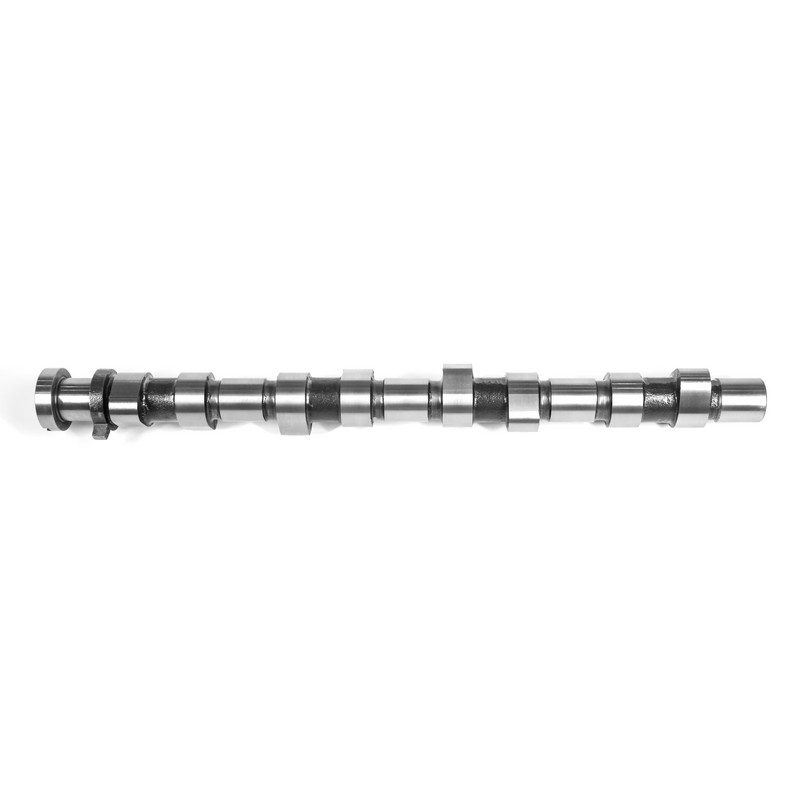 Wholesale Car camshaft-FORD-XS6E6250BB Suppliers, Manufacturers, CompanyANHUI KORBOR MACHINERY CO., LTD. Is China Wholesale FORD-Car camshaft-XS6E6250BB Suppliers, Manufacturers And Company, We Offer FORD-Car ...View Product →
These four points separate a real camshaft manufacturer from a reseller. Our catalogue currently covers more than 800 automobile camshaft part numbers for Asian, European, and North American engine families, and the application-specific geometry is already mapped for most production engines. Because we manufacture from blank to finished part, that consistency is controlled internally: the KB609 Nissan camshaft runs through the same machining and heat treatment lines as every other part, so its quality does not depend on which subcontractor supplied the blank. The same approach works at scale, and our high-volume production capacity lets us hold an identical standard on small and large orders.
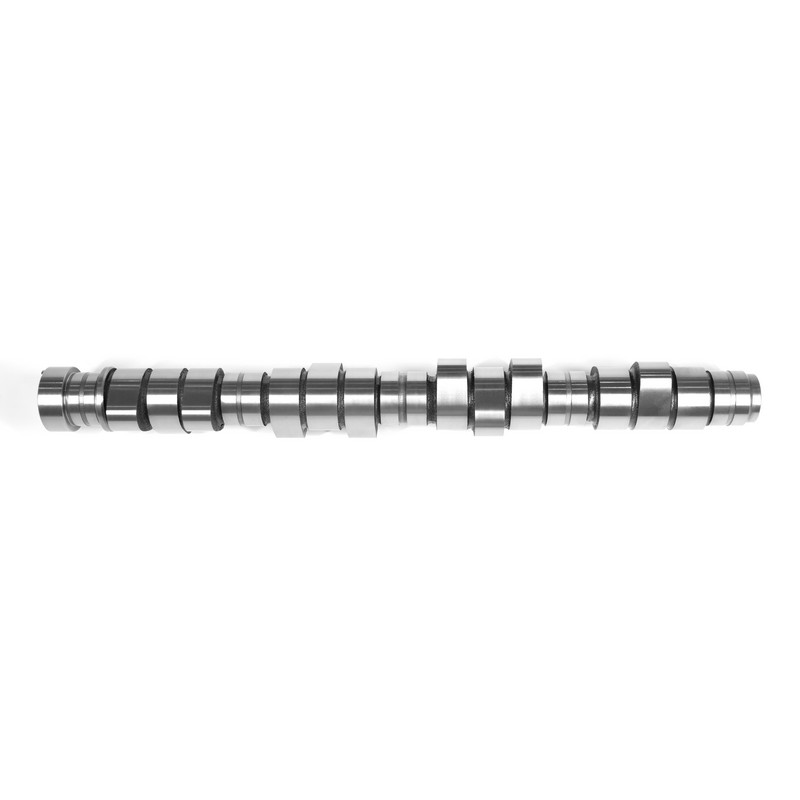 Wholesale Car camshaft-NISSAN-13020F401A Suppliers, Manufacturers, CompanyANHUI KORBOR MACHINERY CO., LTD. Is China Wholesale NISSAN-Car camshaft-13020F401A Suppliers, Manufacturers And Company, We Offer NISSAN-...View Product →
If you are sourcing camshafts for a specific engine code and the right part number is not obvious, do not guess from the engine family alone. Send your engine code to our team, and we will cross-reference it against the catalogue and point you to the matching product, or discuss the profile you actually need.
provide one-stop service from blank casting to finished product finishing, fundamentally control product stability, to ensure delivery.

 English
 中文简体
中文简体 русский
 Español



 闽公网安备35018102000203号