Article Directory
SOHC and DOHC are two architectures for positioning the overhead camshaft that operates the valves. SOHC stands for single overhead camshaft: one camshaft per cylinder head opens both the intake and the exhaust valves. DOHC stands for double overhead camshaft: two camshafts per cylinder head, one for the intake valves and one for the exhaust valves.
Overhead camshaft (OHC): a camshaft mounted in the cylinder head, directly above the combustion chamber, running parallel to the crankshaft and driven by a timing belt, chain, or gear train. An SOHC head uses one such cam; a DOHC head uses two.
In an SOHC layout, each cam lobe either presses directly on a tappet above its valve or pushes a rocker arm that reaches across to an offset valve. This keeps the head compact and cheap, which is why two-valve SOHC engines dominated economy cars for decades. The limitation appears at four valves per cylinder: rocker arms get longer, heavier, and more flexible, which caps the safe redline.
DOHC removes that compromise. Each cam sits directly above its own valves, the actuation path is short and stiff, valve angles follow port geometry, and four valves per cylinder become the natural layout. That is why nearly every modern high-output gasoline engine uses DOHC, as detailed in our car camshaft types and quantities guide.
Read the shortcut this way: SOHC is the economy of moving air, DOHC is the tunability of moving air. The engine that wins on the road is the one engineered around the application.
The table below condenses the engineering differences into the comparison that matters when you are evaluating two engines or ordering replacement parts.
| Parameter | SOHC | DOHC |
| Camshafts per cylinder head | 1 | 2 |
| Typical valves per cylinder | 2 or 3 | 3 or 4, most commonly 4 |
| Valve actuation | Rocker arms or direct tappets | Bucket tappets or finger followers |
| Independent intake and exhaust phasing | Not available with one cam | Standard on dual VVT engines |
| Typical car redline | 5,500-6,500 rpm | 6,500-8,500 rpm |
| Cylinder head parts count | Lower | Higher |
| Typical repair cost | Lower | Higher |
| Common applications | Commuter cars, light trucks, small motorcycles | Sports cars, turbo engines, sport motorcycles |
The story behind the table is timing flexibility. An SOHC engine can phase its single cam, but the intake and exhaust lobes move together, so you cannot advance intake timing without also advancing exhaust timing. A DOHC engine with two cam phasers adjusts each bank separately, which is why late-model turbo engines use DOHC to balance spool, knock, and emissions.
Quick benchmark: at the same displacement and compression ratio, a well-designed DOHC 16-valve head flows 15-25 percent more air at peak lift than an SOHC two-valve head. The main penalty is machining cost and part count, not the concept.
DOHC produces more peak power per liter because four smaller valves create a larger opening area and a central spark plug; SOHC defends itself with stronger low-end response and lower friction in simple designs.
Valve area is the first measurable difference. On an 85 mm bore, a single 34 mm intake valve gives roughly 908 square mm of valve area. Two 27 mm intake valves give roughly 1,145 square mm, about 26 percent more area for the same bore. That extra opening area is what a DOHC head converts into airflow at high piston speed.
Four-valve chambers also place the spark plug in the center of the combustion chamber. Shorter flame travel reduces knock tendency, which allows more ignition advance or a higher compression ratio. The result is better thermal efficiency and lower fuel consumption under load, not just more peak power.
SOHC vs DOHC attribute comparison, score out of 10
Valvetrain mass shows up at the top of the rev range. Long rocker arms add reciprocating mass; DOHC bucket-tappet layouts are lighter and stiffer, so they rev higher before valve float. In production cars, the gap is typically 1,000-2,000 rpm in favor of DOHC.
Both layouts last the same mileage with regular oil changes; the real difference is the repair bill. SOHC engines cost less to maintain because the cylinder head simply contains fewer parts.
That labor split shows up in real costs. At typical shop rates, a DOHC valve adjustment runs 100-300 dollars more than on an SOHC engine of the same vintage. It does not change commuting, but it changes the math on a high-mileage used car or motorcycle.
When a camshaft finally wears, matching the original lobe profile and journal hardness matters more than the SOHC or DOHC label. Ordering by engine code is still the safest route: a Ford car camshaft from a supplier that grinds to OE dimensions keeps the intake and exhaust events identical to stock.
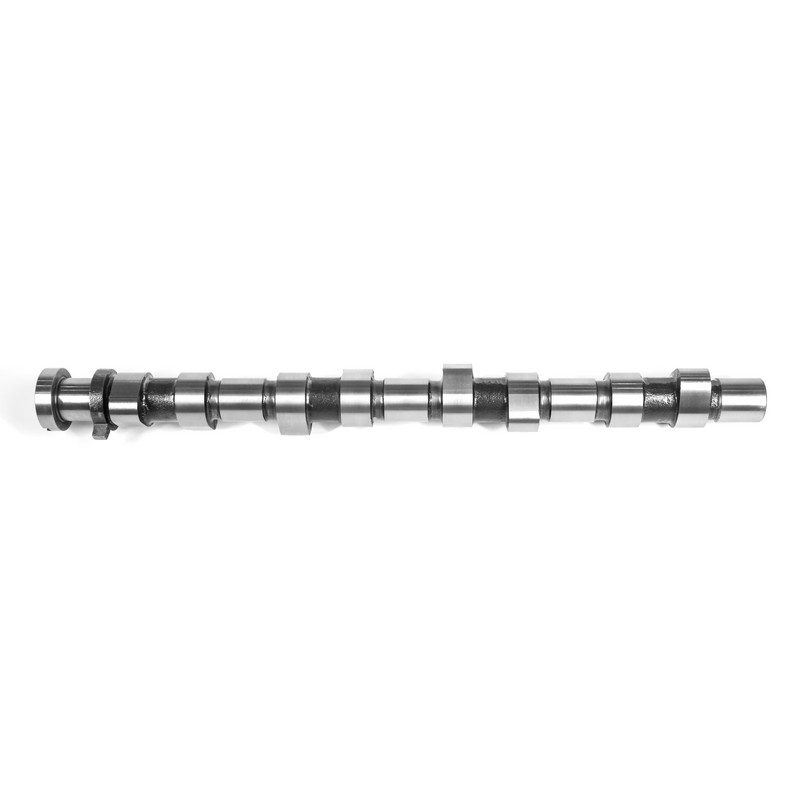 Wholesale Car camshaft-FORD-XS6E6250BB Suppliers, Manufacturers, CompanyANHUI KORBOR MACHINERY CO., LTD. Is China Wholesale FORD-Car camshaft-XS6E6250BB Suppliers, Manufacturers And Company, We Offer FORD-Car ...View Product →
If your DOHC engine is an interference design, never skip the timing belt or chain interval. A broken chain at speed usually bends every intake and exhaust valve, turning a 300-dollar maintenance job into a 2,500-dollar head repair.
Choose SOHC when the priority is low purchase price, low service cost, and easy city torque. Choose DOHC when you need high specific power, strong high-rpm output, or the emissions flexibility of independent cam phasing.
Application matters more than fashion. A well-made SOHC engine beats a poorly made DOHC engine on every metric, which is why supplier quality and camshaft material dominate the buying decision. KORBOR (Anhui KORBOR Machinery Co., Ltd.) has been a camshaft-only manufacturer since 1999, producing more than 1,400 part numbers for car and motorcycle engines.
On two wheels, a 125-150 cc commuter usually runs an SOHC single, and a 600 cc supersport runs a DOHC inline-four. When a used bike loses its crisp throttle response, the camshaft is often the first place to inspect. For a commuter with lost idle quality, a fresh Honda motorcycle camshaft with the original lobe separation is the direct fix.
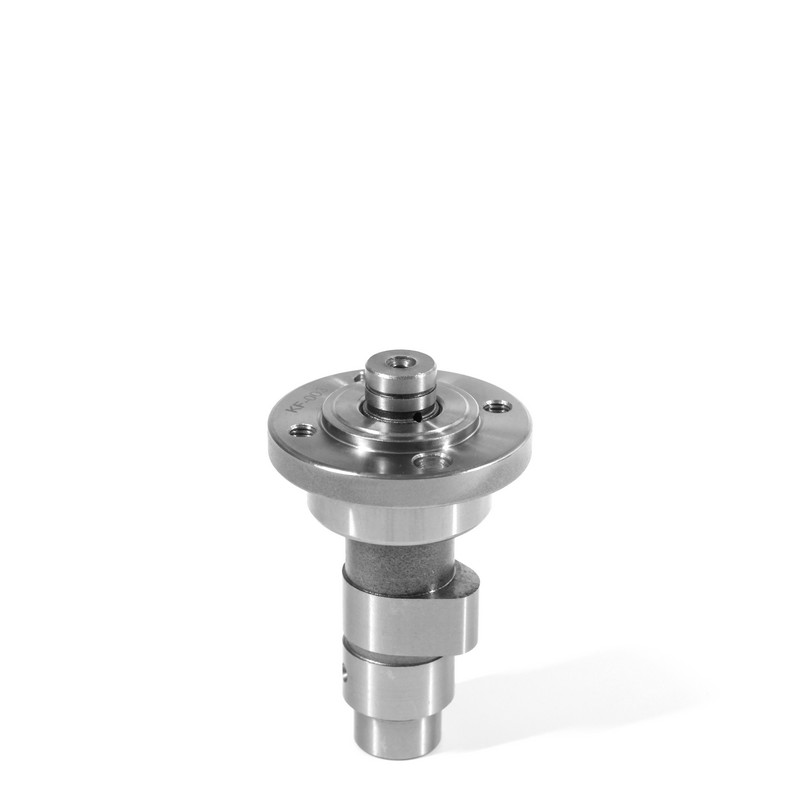 Wholesale Motorcycle camshaft-HONDA-KF-003 Suppliers, Manufacturers, CompanyANHUI KORBOR MACHINERY CO., LTD. Is China Wholesale HONDA-Motorcycle camshaft-KF-003 Suppliers, Manufacturers And Company, We Offer HONDA...View Product →
On a high-revving sports twin, the same rule applies: a Yamaha motorcycle camshaft sourced to the original profile prevents intake and exhaust timing drift. KORBOR runs production under an IATF 16949:2016 quality system with zero-defect targets, from raw casting to finish machining.
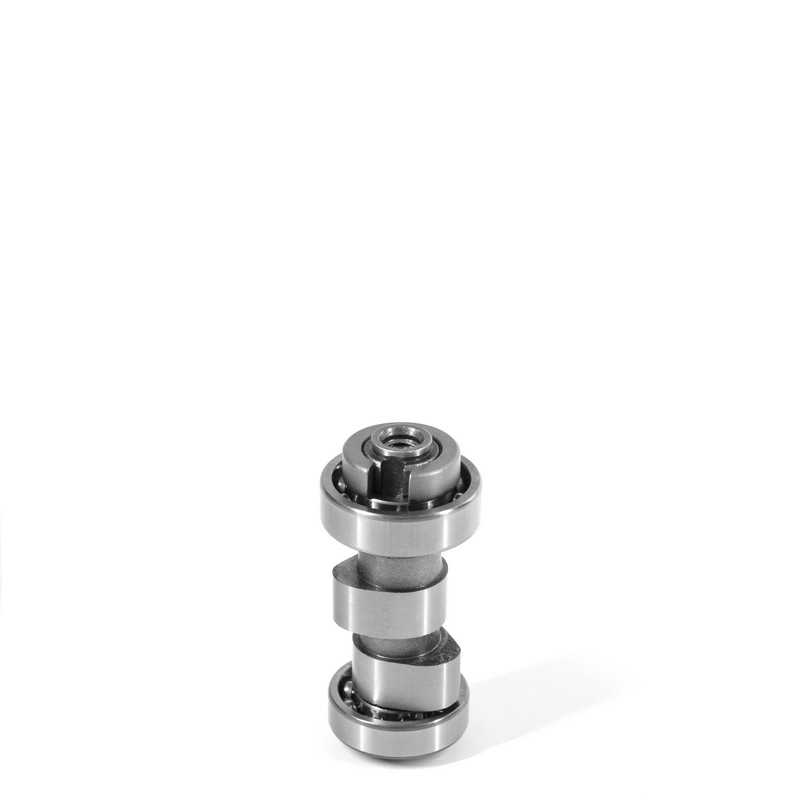 Wholesale Motorcycle camshaft-YAMAHA-4GT-E2170-01 Suppliers, Manufacturers, CompANHUI KORBOR MACHINERY CO., LTD. Is China Wholesale YAMAHA-Motorcycle camshaft-4GT-E2170-01 Suppliers, Manufacturers And Company, We Offe...View Product →
Final verdict: buy the car or motorcycle the application justifies, not the one the acronym advertises. When you repair, keep the layout you already have and keep the camshaft specification identical to the original.
No. At identical displacement, DOHC usually reaches a higher peak figure, but SOHC engines often match low-end torque and fuel economy in calm driving. The clearest gap appears above 4,500 rpm, where the four-valve airflow gives DOHC the advantage.
SOHC. Fewer camshafts, less timing hardware, and simpler valve adjustment translate into shorter labor time and cheaper parts. The difference is most visible on major service items such as valve adjustment and timing belt replacement.
In practical terms, no. A conversion demands a different cylinder head, cam carrier, timing drive, pistons, and sometimes the block because the valve pockets differ. Buying a factory DOHC engine is almost always cheaper and more reliable than converting an SOHC unit.
Modern DOHC engines with dual cam phasing tend to win in combined driving because they optimize intake and exhaust timing around the operating point. Older simple SOHC engines can match them in steady highway cruising, but they give away efficiency during acceleration.
Keep the engineering short version as your takeaway: DOHC is the airflow architecture, SOHC is the economy architecture. Choose by application, keep the stock cam spec, and buy from a manufacturer that treats camshaft manufacturing as a single-product discipline.
provide one-stop service from blank casting to finished product finishing, fundamentally control product stability, to ensure delivery.

 English
 中文简体
中文简体 русский
 Español



 闽公网安备35018102000203号