Article Directory
A Bajaj Pulsar 220F that loses pull above 8,200 rpm, a Boxer 150 idling with a persistent knock, and a Discover 125 that backfires under load can all trace their symptoms to one rotating part: the camshaft.
Replacing a Bajaj motorcycle camshaft is not a bolt-on part-number exercise. Lobe lift and duration reposition the entire power band. Material hardness determines whether the part survives 50,000 km in daily service. Timing-mark errors produce bent valves within minutes. This guide maps the selection factors that matter for Bajaj single-cylinder engines, from the commuter Boxer range to the four-valve Dominar 400.
Bajaj manufactures camshafts to engine-family-specific profiles, so a Boxer 150 camshaft will not perform correctly in a Pulsar 220 even though both use chain-driven single-overhead-cam valve trains. The five families diverge in lift, duration, and lobe phasing.
The engineering logic is consistent: commuter platforms are tuned for low-rpm torque and fuel economy, while DTS-i performance engines extend the usable range toward 9,000 rpm. The Dominar 400 operates on a heavier four-valve architecture with higher valve-spring loads.
| Engine family | Intake lift | Duration | Valve train |
| Boxer / Platina | 6.0-6.4 mm | 240-246 degrees | SOHC, 2-valve |
| Discover DTS-Si | 6.2-6.6 mm | 244-250 degrees | SOHC, 2-valve |
| Pulsar 150 / 180 | 6.5-6.8 mm | 248-254 degrees | SOHC, 2-valve |
| Pulsar 200 / 220 | 6.8-7.2 mm | 255-262 degrees | SOHC, 2-valve |
| Dominar 400 | 8.0-8.4 mm | 262-270 degrees | SOHC, 4-valve |
Lobe separation angle (LSA) is the angular distance between the centerlines of the intake and exhaust lobes, expressed in camshaft degrees. A wider LSA in the 105-108 degree range flattens torque and cleans idle quality; a narrower 102-104 degree LSA builds overlap, shifting the torque peak lower while intensifying the exhaust note.
Five lobe and geometry parameters determine how a Bajaj camshaft behaves: lobe lift, duration, lobe centerline angle, base circle diameter, and journal diameter. Change any single value and the engine mapping, spring rate, and valve clearance strategy all shift with it.
Stock Pulsar 220 cam
6.8 mm lift, 248 degrees duration, 106 degree LSA, chilled cast iron, compatible with stock valve springs and the standard ECU tune.
Performance upgrade
7.4 mm lift, 268 degrees duration, 104 degree LSA, hardened steel, requires stiffer springs, a cam chain check, and an ECU remap.
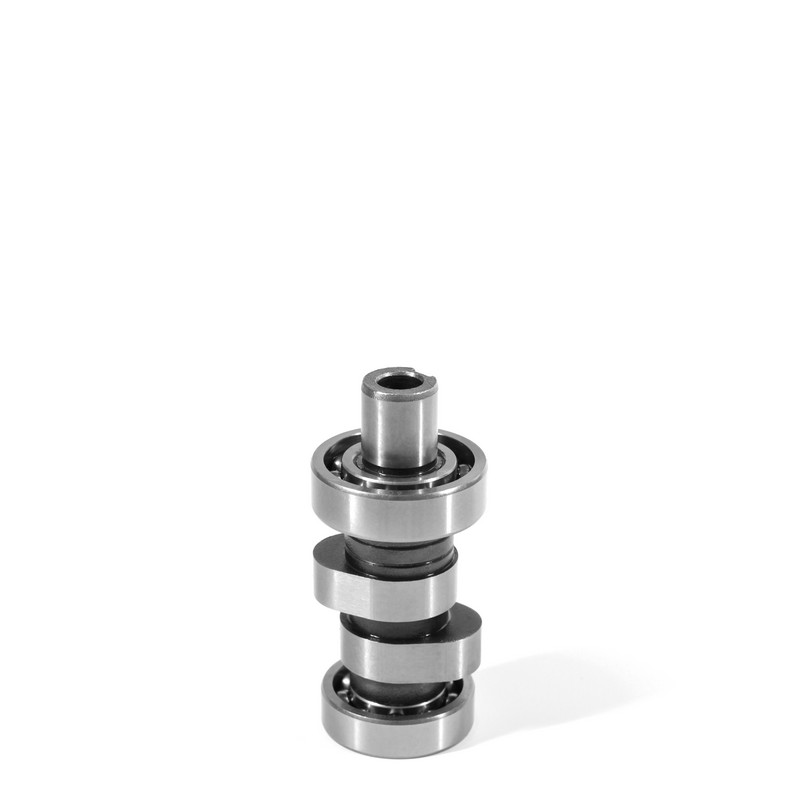 Bajaj Pulsar 135 LS Upgraded Camshaft for Higher Lift and DurationCheck this performance camshaft for the Pulsar 135 LS if you are raising lift beyond 7.2 mm or adding stiffer springs; its hardened steel construction suits the stressed valvetrain described here.View Product →
Chilled cast iron is the dominant stock material for Bajaj camshafts, but carburized and nitrided steel become necessary once spring loads exceed 25 kg or lift passes 7.2 mm. The material decision is a direct trade between cost, surface hardness, and core toughness.
Timing errors cause more post-replacement failures than lobe wear; verify all alignment and clearance items before rotating the engine. A dial indicator, feeler gauges, and a flywheel lock are the only tools needed to complete the critical checks.
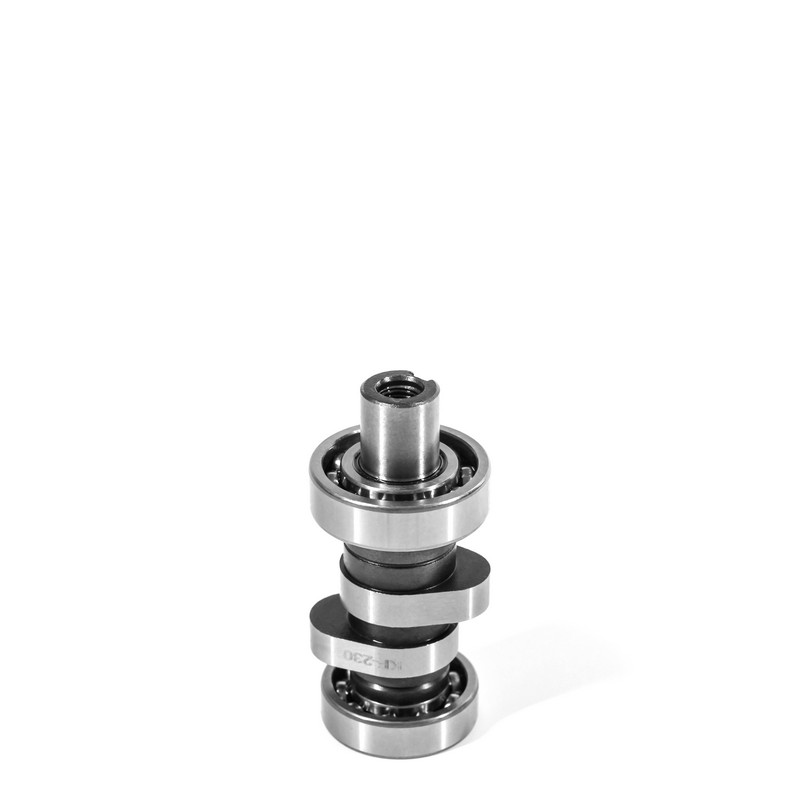 KORBOR JZ511004 Motorcycle Camshaft from IATF-Certified ManufacturerThis aftermarket camshaft comes from a manufacturer with batch-level quality documentation, making it a sensible choice when supplier reliability matters more than price for avoiding early lobe failure.View Product →
Aftermarket Bajaj camshafts differ more between suppliers than between price points, so certification and batch-level quality records are the effective filters for procurement decisions. A low unit price means nothing when the lobe flank spalls after 8,000 km.
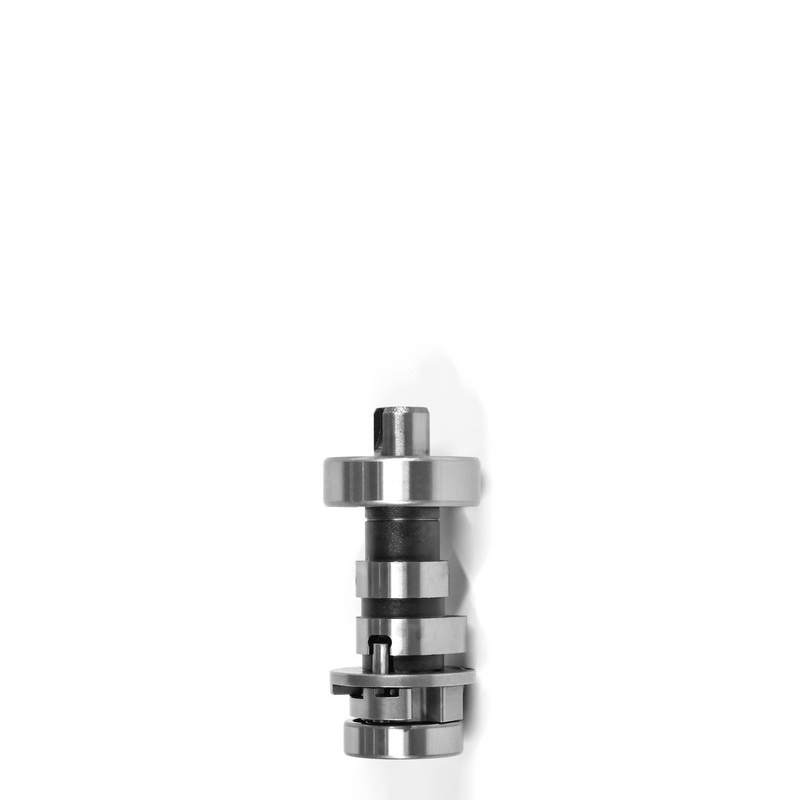 KORBOR AA101847 Motorcycle Camshaft with Verified Quality StandardsReview this camshaft when matching parts to your engine code; the supplier's IATF 16949 certification and consistent batch production help reduce the risk of receiving a visually identical but substandard part.View Product →
When the application list matches your engine code, the sensible next step is to review the full Bajaj motorcycle camshaft catalogue against your year and chassis number. Suppliers that publish measurable quality data, such as the IATF 16949 quality management documentation used by KORBOR, reduce the risk of purchasing a part that only looks correct in a box.
With correct valve clearance and regular oil changes, a stock Bajaj camshaft typically lasts 40,000-70,000 km. Performance profiles with higher lift and spring pressure shorten that range, while poor oil supply accelerates lobe wear regardless of material.
No. Journal diameters, sprocket positions, and rocker arm ratios differ between Bajaj engine families. Select the camshaft designed for your specific engine code instead of adapting a part from a larger displacement sibling.
Rotate the engine to TDC, align the flywheel mark with the crankcase pointer, and check that the cam sprocket timing mark points at the cylinder head deck. Both valves should be closed with measurable rocker clearance at TDC on the compression stroke.
Persistent tappet noise after valve adjustment, loss of high-rpm acceleration, unstable idle, and visible lobe pitting on the flanks during inspection. Catching these signs early prevents damage to followers, chains, and the cylinder head.
provide one-stop service from blank casting to finished product finishing, fundamentally control product stability, to ensure delivery.

 English
 中文简体
中文简体 русский
 Español



 闽公网安备35018102000203号